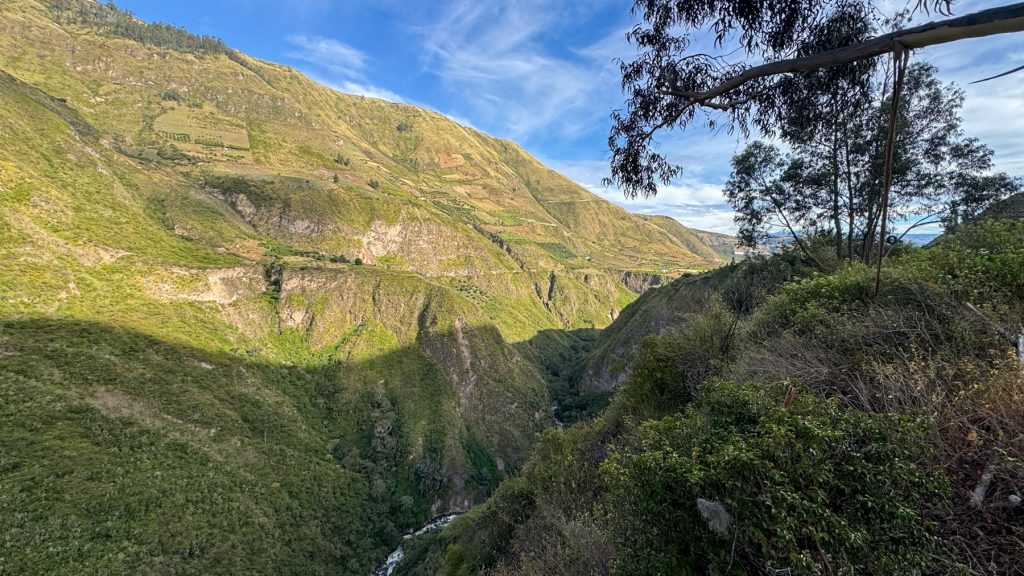
The Carretera Austral is a 1,247km route between Puerto Montt and Villa O’Higgins linking some of Patagonian Chile’s most remote towns and villages.
The first 800km or so of Ruta 7 is mostly on tarmac but the last 400km south of Puerto Río Tranquilo is gravel and compacted mud making it the hardest road we have driven so far, solely because of the condition of the road. We spent three weeks in total driving from Puerto Montt to Villa O’Higgins and then to Chile Chico.
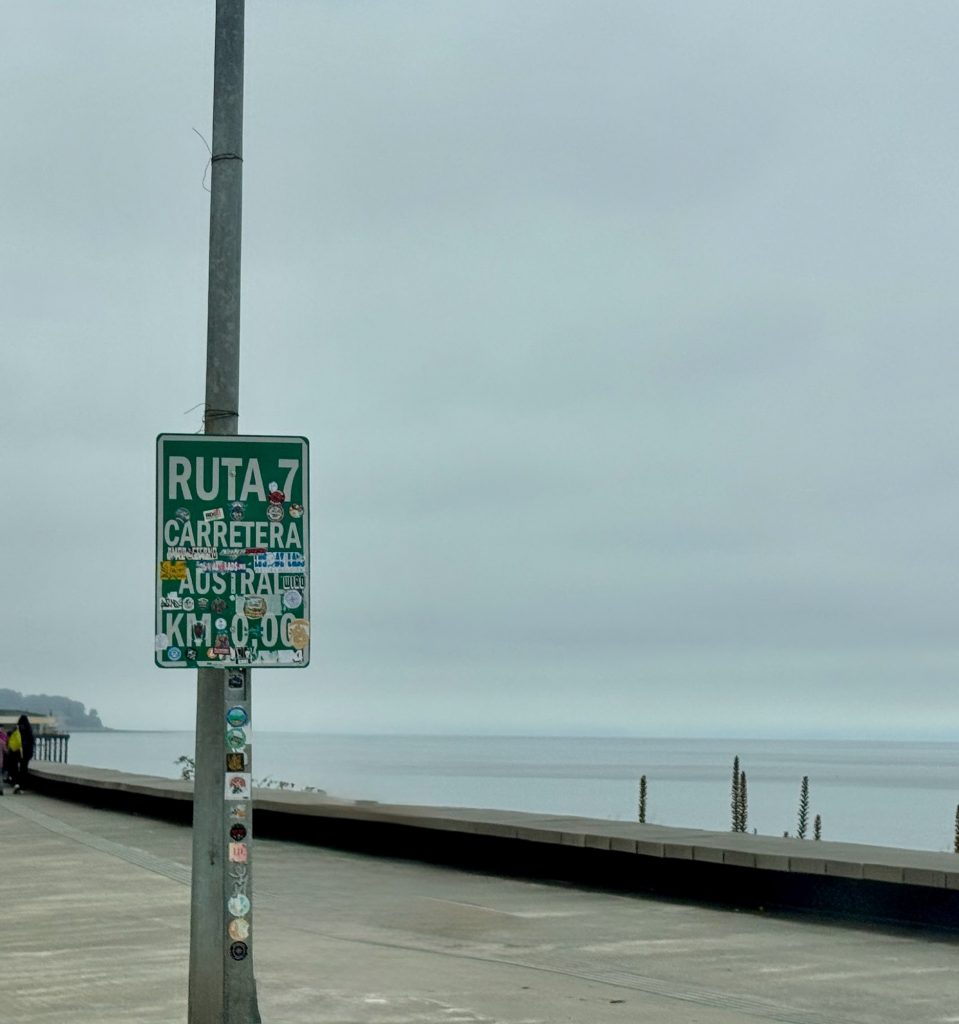
If travelling north to south, the route begins in Puerto Montt. We didn’t spend much time here due to lack of parking places and moved on as soon as we’d topped up with fuel, water and food. Hindsight is a wonderful thing and we should also have got LPG here but we didn’t even think about it.
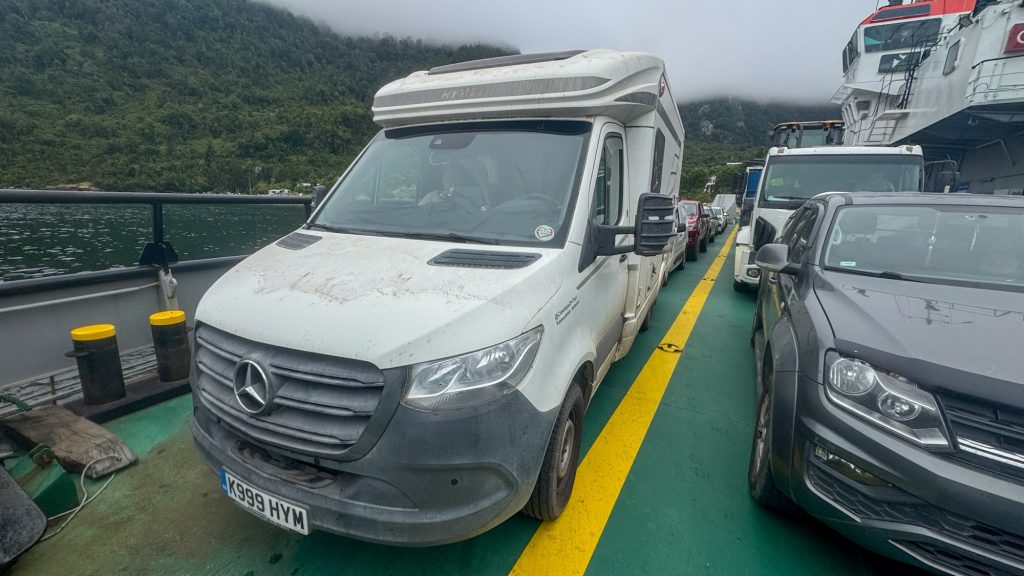
From Puerto Montt we drove to Caleta La Arena for a 35 minute ferry ride to get us to Puelche from where we drove to Contao for a couple of quiet nights watching for dolphins. We were essentially killing time in Contao as we had not been able to get an earlier reservation on the next ferry but it wasn’t really a problem.
The next stage was from Hornopirén to Caleta Gonzalo via two ferries which took about six hours and this was the only part of the whole Carretera we had to prebook.
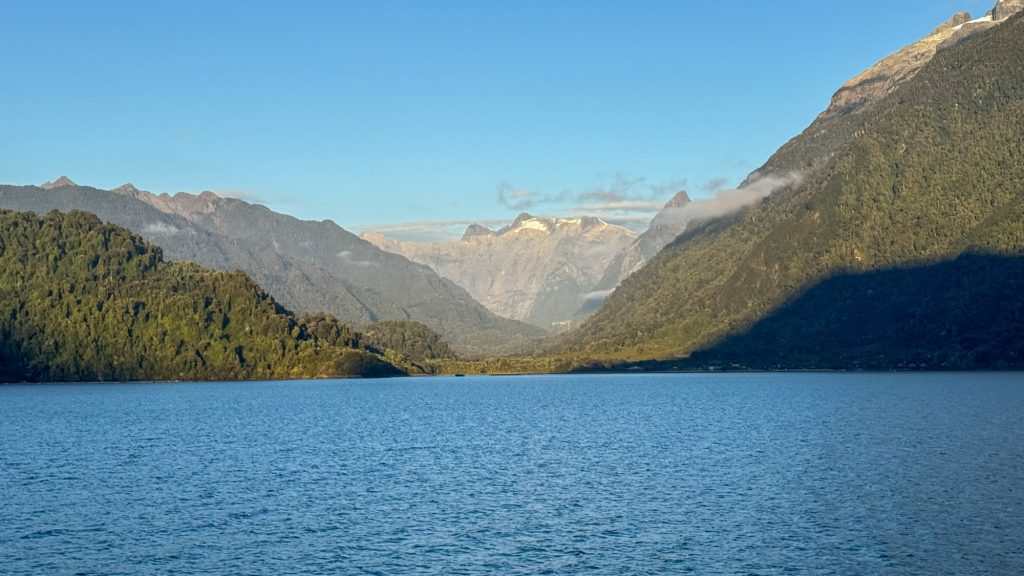
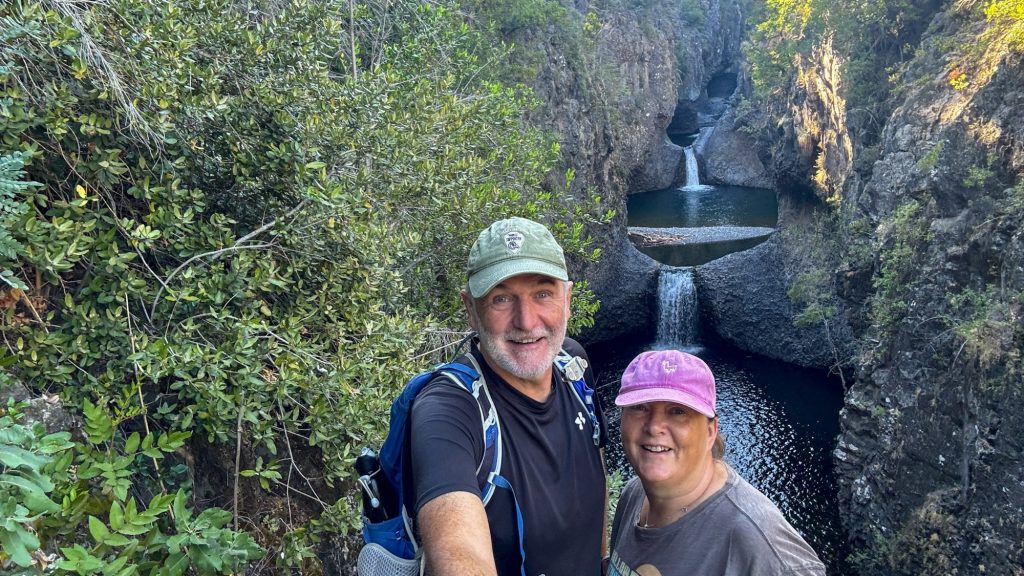
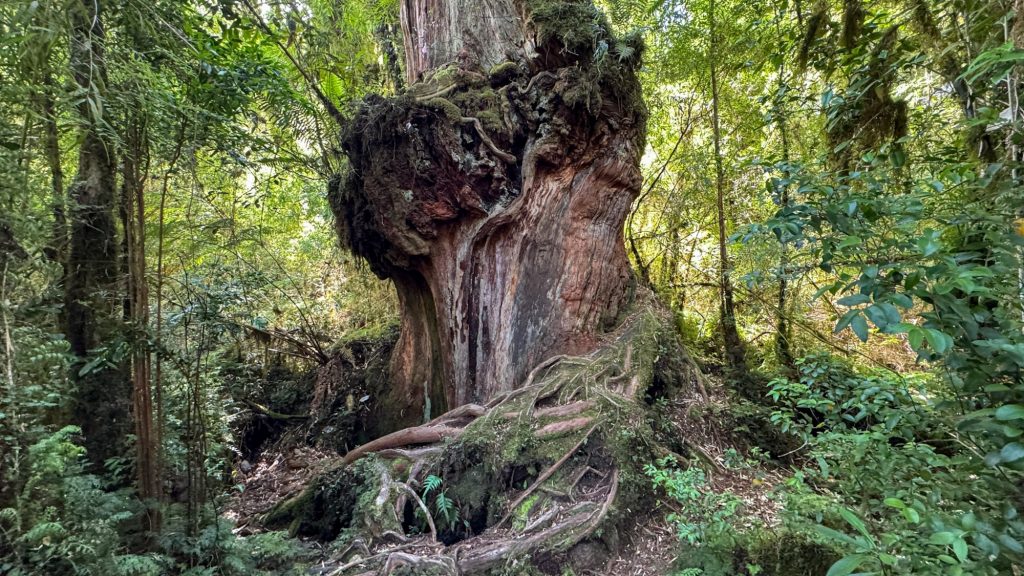
Having arrived very late and in the dark, we parked up immediately after disembarking from the ferry and awoke the following morning in Pumalín National Park where we had planned to do some hiking. Unfortunately for us several of the trails were closed but the short Alerce Trail through 3,000 year old trees was open so we managed to stretch our legs a little.
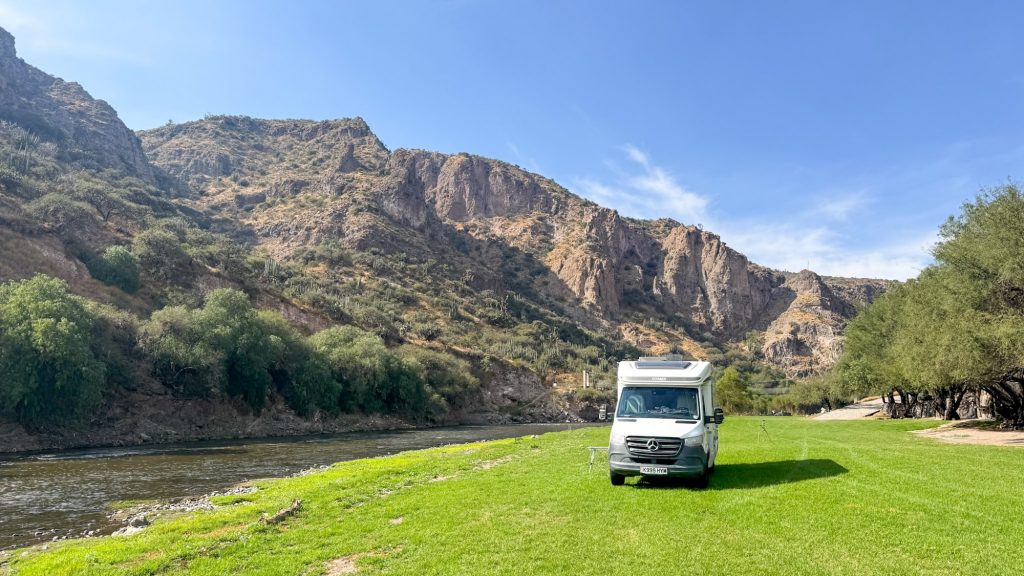
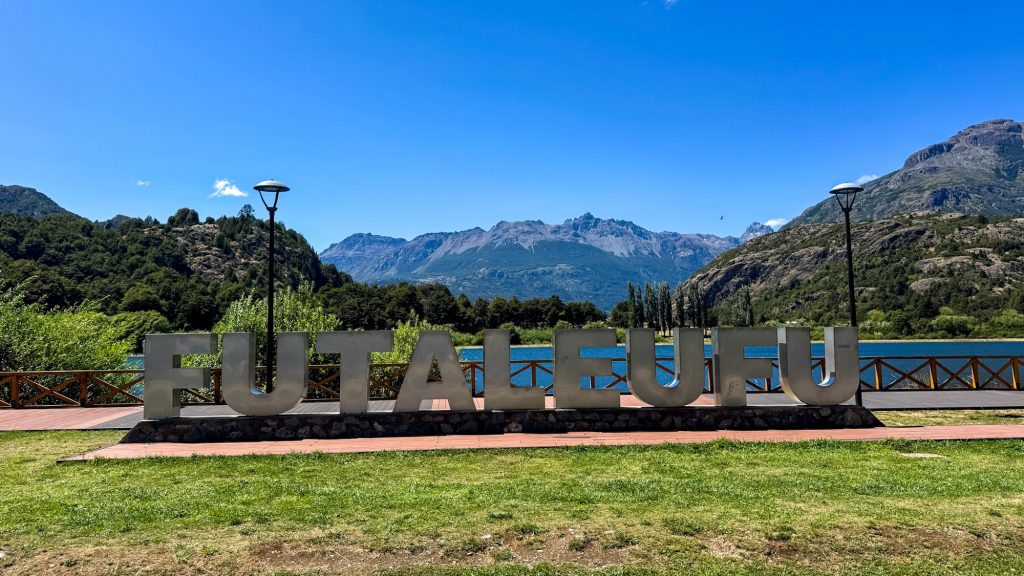
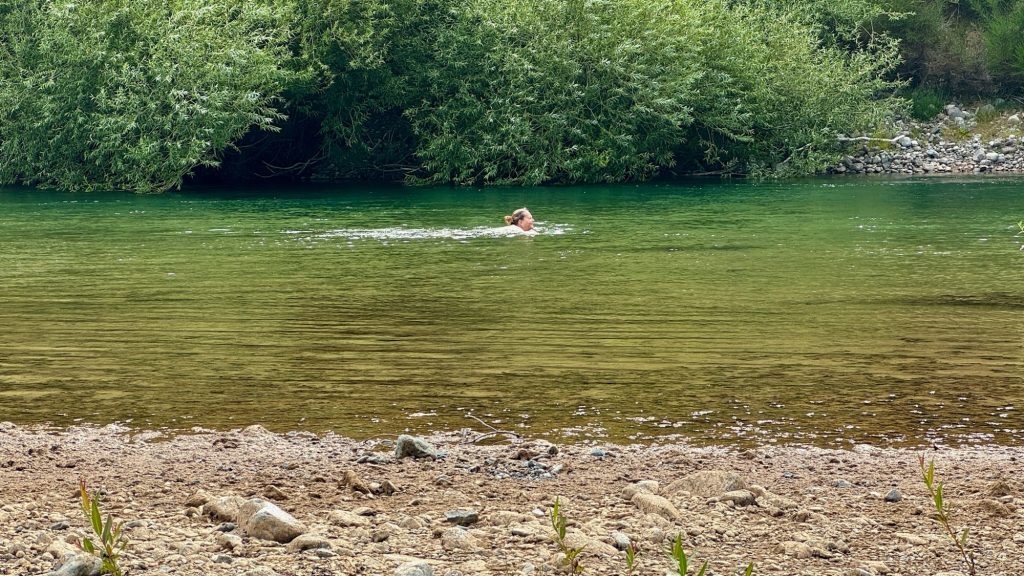
We took a short diversion off Ruta 7 towards the village of Futaleufú, close to the Argentinian border. The area is world renowned for rafting and kayaking on the River Futaleufú but the campsite had a small stretch of beach by a calmer section which was perfect for swimming.
We had intended to visit the Ventisquero Colgante (hanging glacier) in Queulat National Park but the weather wasn’t on our side.
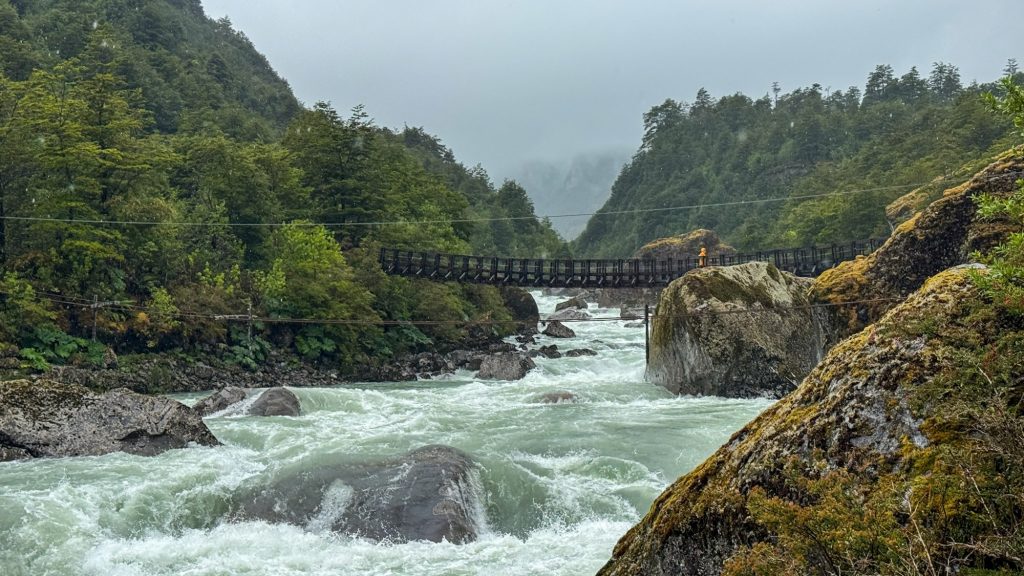
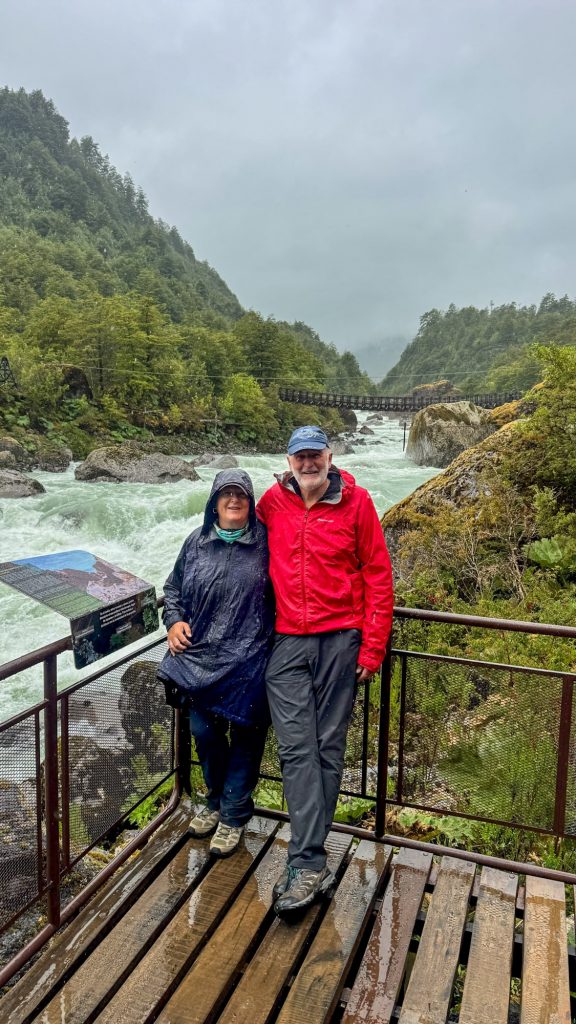
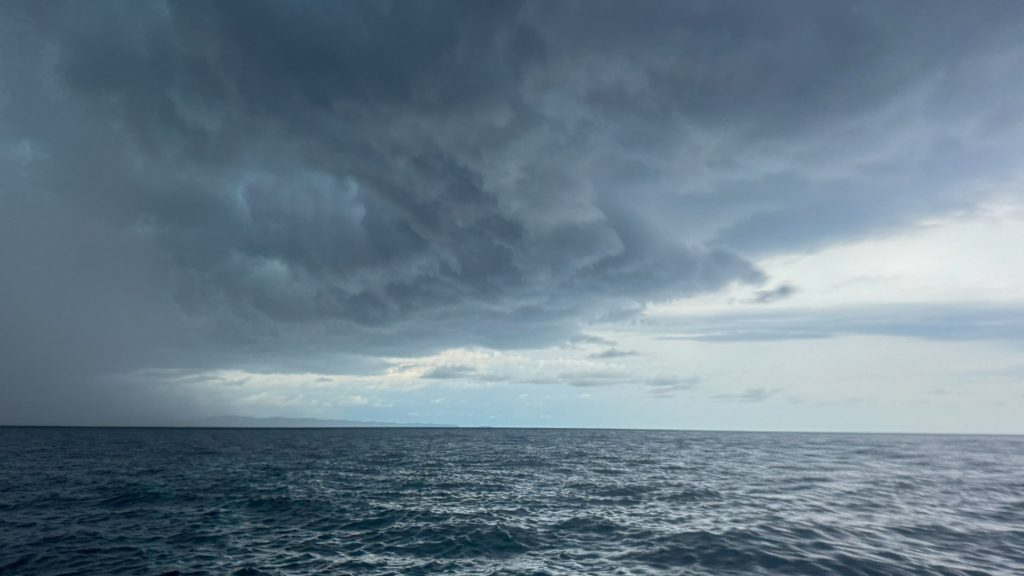
The park is a temperate rain forest and boy, did it rain that day, but it didn’t stop us getting out for a walk and the park was still beautiful. The glacier wasn’t visible from the viewpoint but could be seen from the lake, however there was no way we were going to take an open rib ride in the pouring rain!
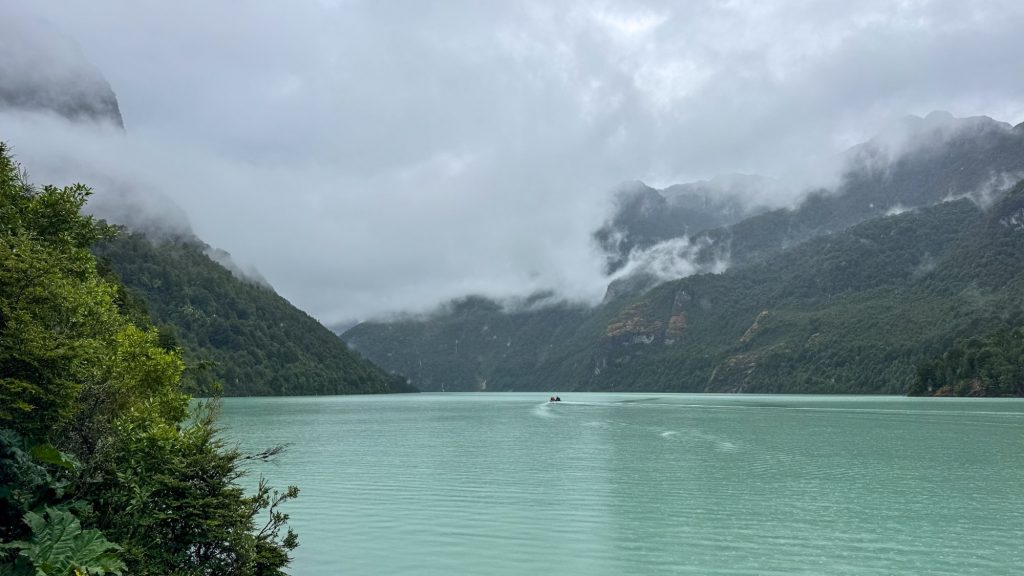
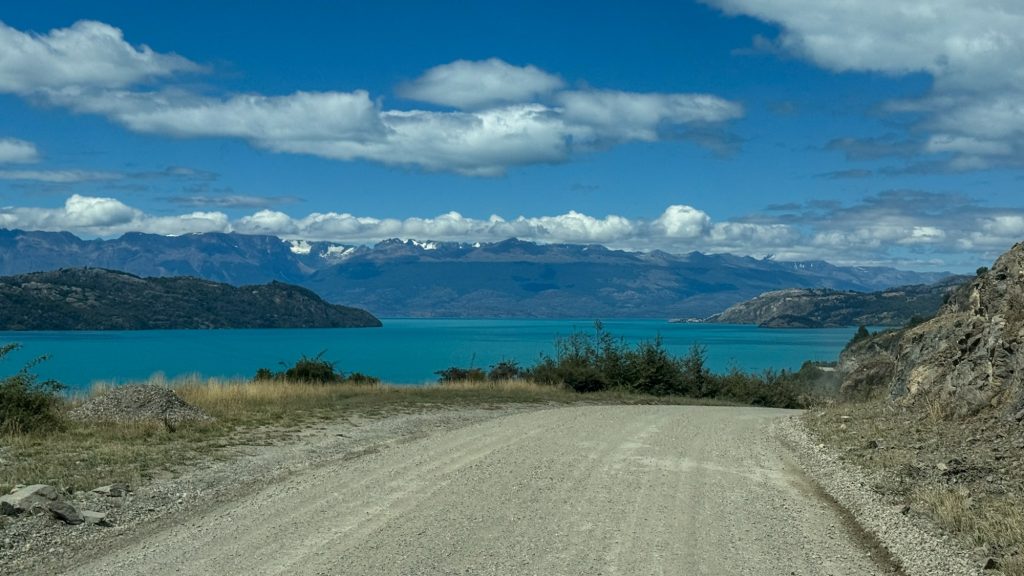
As we continued south to Puerto Rio Tranquilo, the weather began to improve and the sun was well and truly out for our trip on Lago General Carrera, the second largest lake in South America, to visit the marble caves, the biggest tourist attraction in this area. The composition of the rocks and the sun reflecting off the water combine to create these colourful caves.
We took the “Full” tour with Sur Nomade but from walking around the huts offering the tours, all the companies offered almost identical trips at the same price. The tour was about 2.5 hours and took us out to Isla Panichini to see a couple of shipwrecks before exploring the marble caves area. Our boat was one of the smaller ones, holding just 10 passengers and our guide gave his commentary in Spanish and English.
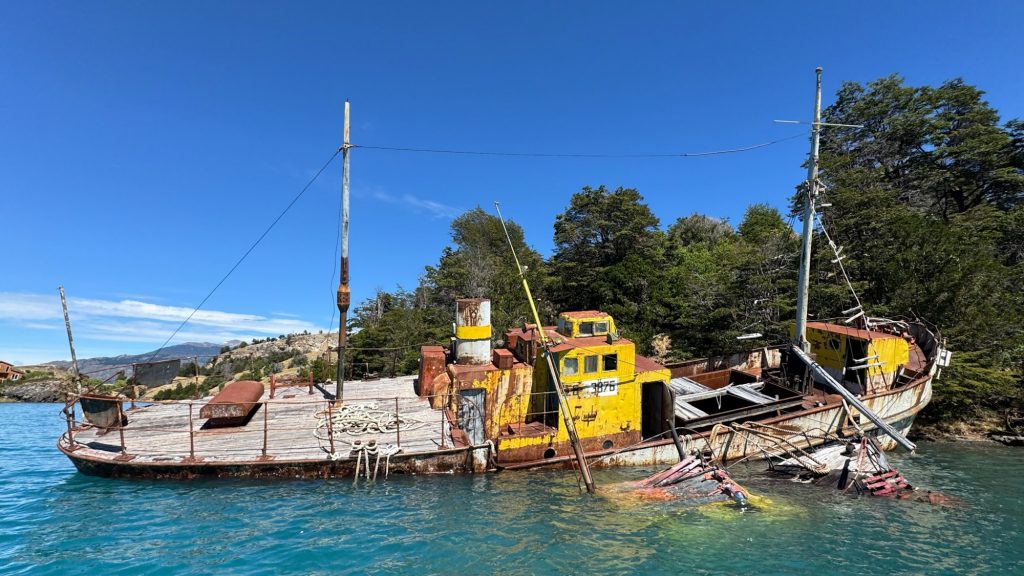
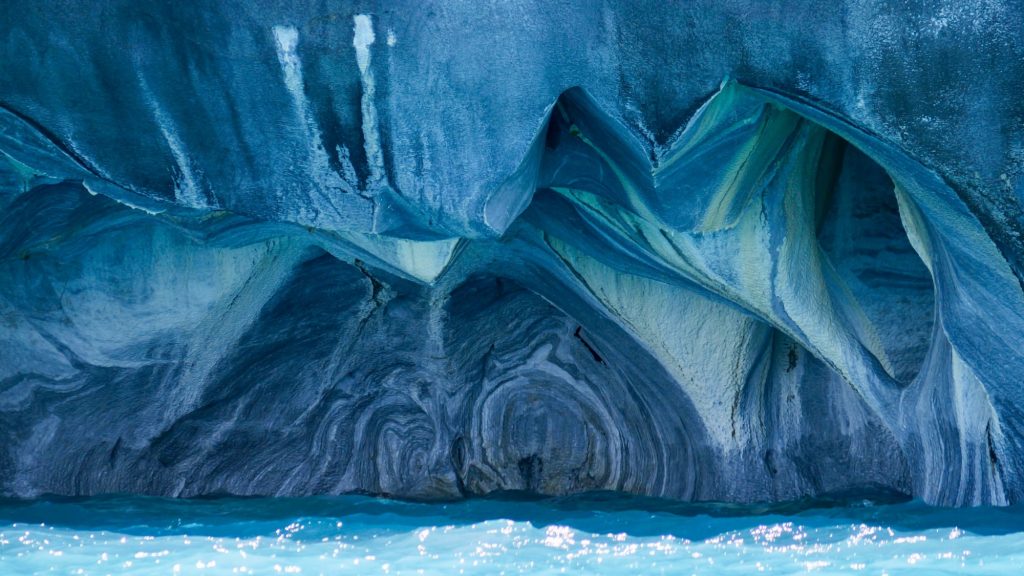
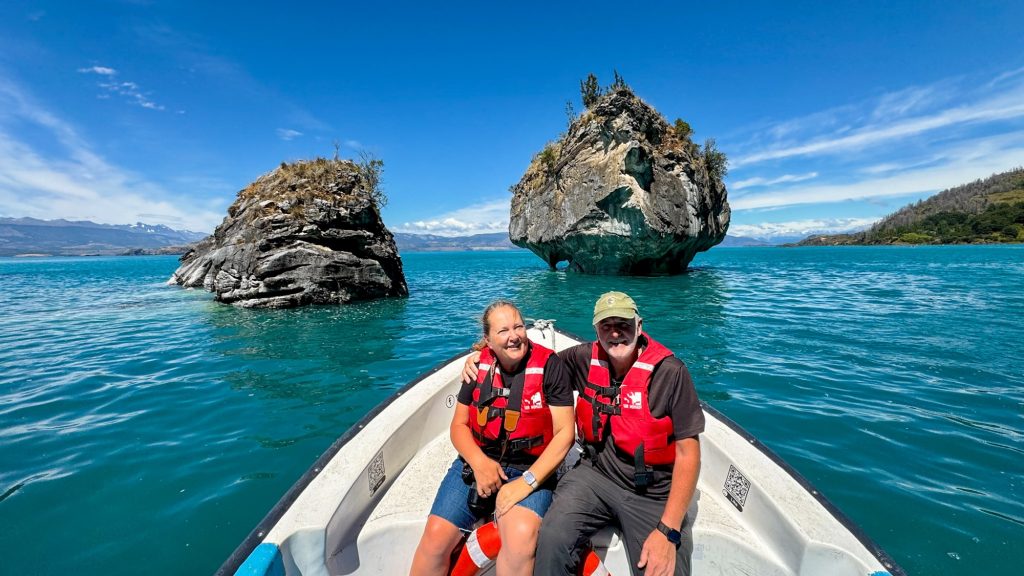
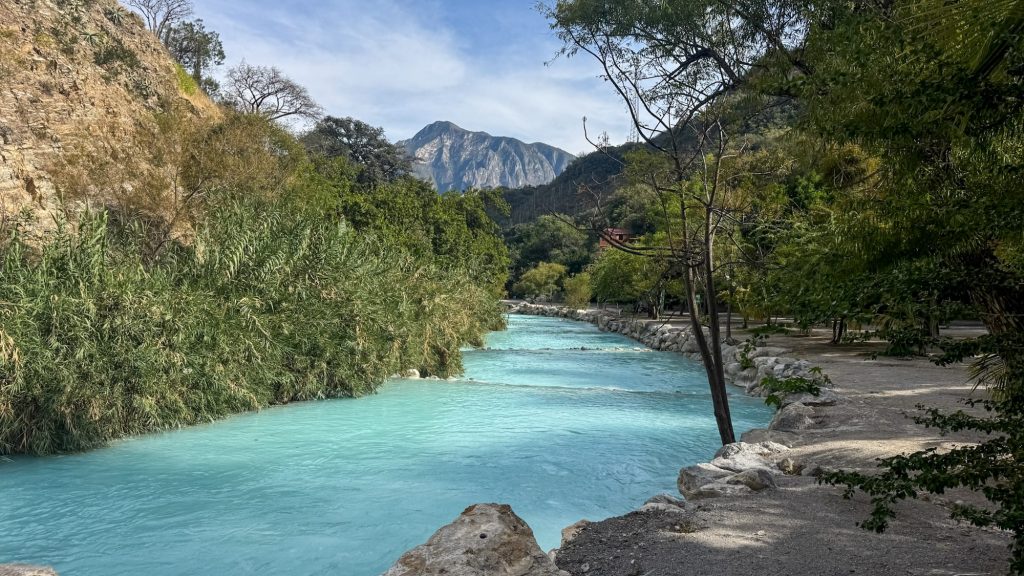
We followed the turquoise Río Baker for some distance; it was one of the most intensely coloured rivers we have ever seen. At its confluence with the Río Nef you can see the two distinctly different rivers as they merge.
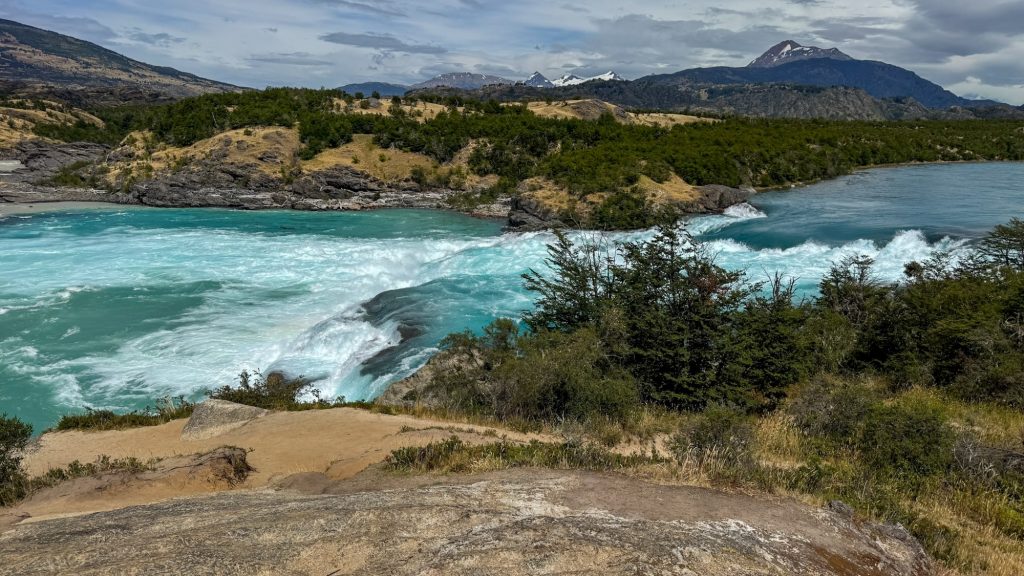
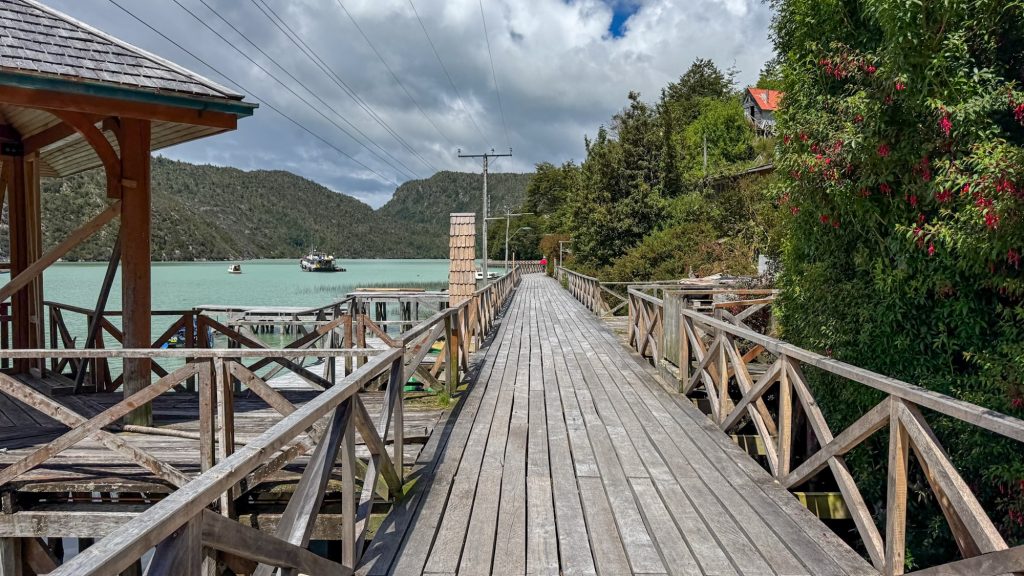
Our last detour from Ruta 7 was to visit the small fishing village of Caleta Tortel where the Río Baker empties into one of the many fjords along the coast here. The main part of the village sits along a boardwalk at the base of the mountain and just above the water. No cars are permitted here.
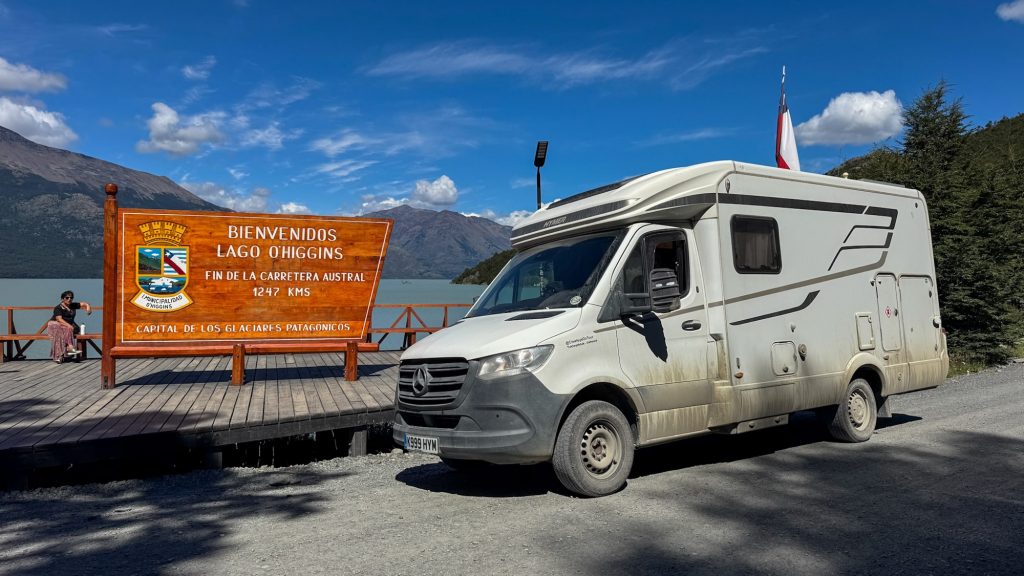
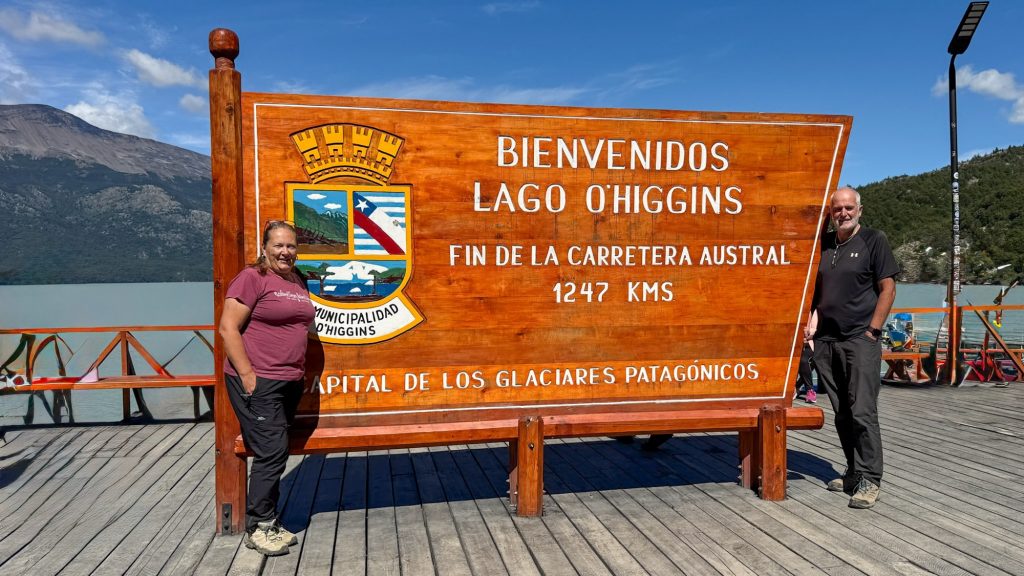
After taking another ferry we finally arrived in Villa O’Higgins – the end of the road! There really wasn’t much to do here other than get our picture taken at the sign and collect our certificates from the tourist office once we had presented evidence that we had completed the full length of the Carretera Austral.
A lot of people then have to make their way back along the same route but we only went back as far as Lago Carrera General. We followed the eastern coast of the lake this time to Chile Chico where we spent a couple of days before crossing the border into Argentina.
General information
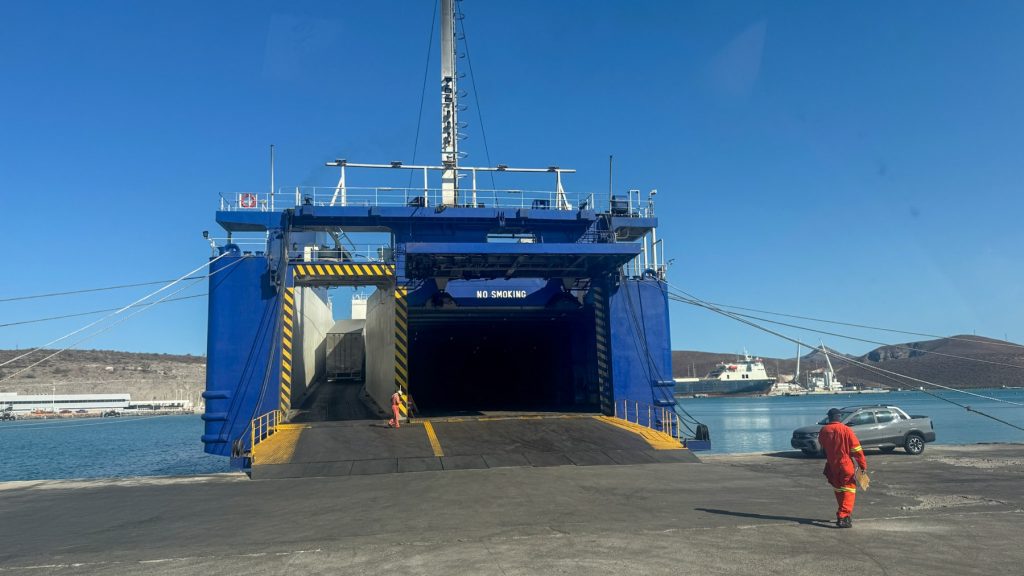
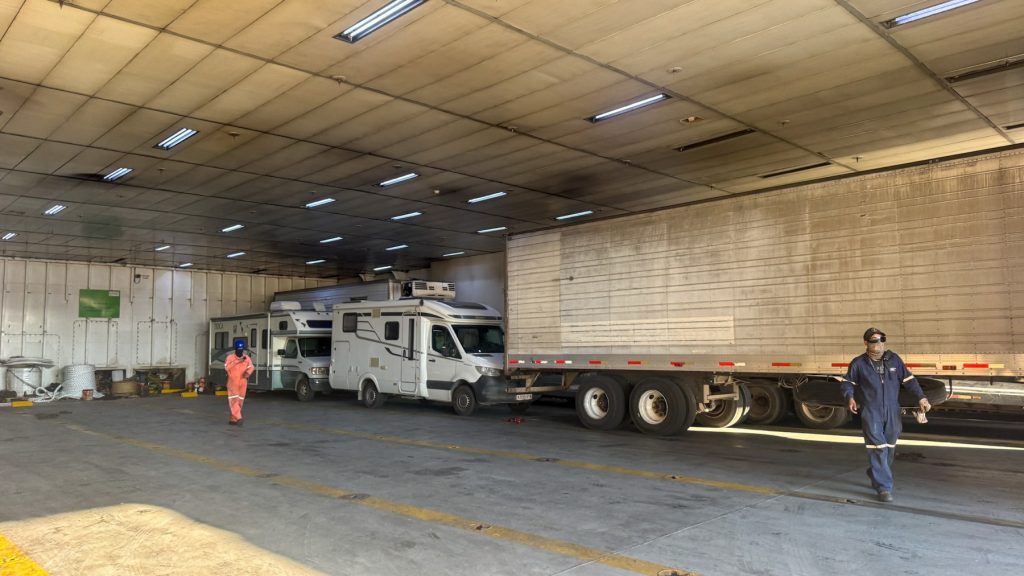
Ferries – you can’t avoid taking ferries when driving the Carretera Austral. The Caleta La Arena-Caleta Puelche and Puerto Yungay-Río Bravo routes do not require reservations and you simply join the queue to get onboard. A member of staff came to each vehicle so you could buy your ticket and we paid by credit card each time.
The route from Hornopirén to Caleta Gonzalo actually involves two ferries with a 15 minute drive in between and does have to be pre-booked with the ticket covering both ferries. Even towards the end of the season we couldn’t get a reservation for a couple of weeks and in high season you need to book months ahead. The first leg is about three hours sailing through the Canal Cholgo which passes through snow capped mountains and when we travelled there were two sailings daily. The second leg is only about 30 minutes but the ship is half the size of the first one so it has to do two journeys so we were hanging around for over an hour between the two ferries.
There is also a ferry service running between Puerto Montt and Puerto Natales which also stops at various points along the Carretera including not far, relatively speaking, from Villa O’Higgins but it only sails twice a week and fills up quickly!
We had no problems with finding fuel and just kept topping up as we went along. Understandably the fuel here was the most expensive we found in Chile at just over £1 per litre.
There was nowhere to fill our LPG tanks south of Puerto Montt nor in the area of western Argentina where we were heading to next but we managed to eke out what we did have for a lot longer than we thought possible!
We tend to fill up the freshwater tank when on a campsite or at a fuel station and had no problem with water.
We stocked up at the large supermarkets in Puerto Montt and Cochrane and picked up a few odds and ends at small tiends as we went along. Away from the main towns, choice was obviously limited.
We had done quite a bit of research into what we needed to take with us and one of the warnings was to take plenty of cash. Apart from a couple of campsites who wanted cash, we found that most places accepted cards. We appreciate that people will have different interpretations of “plenty” but we probably spent no more than the equivalent of £50 in cash over the three weeks we were on the road.
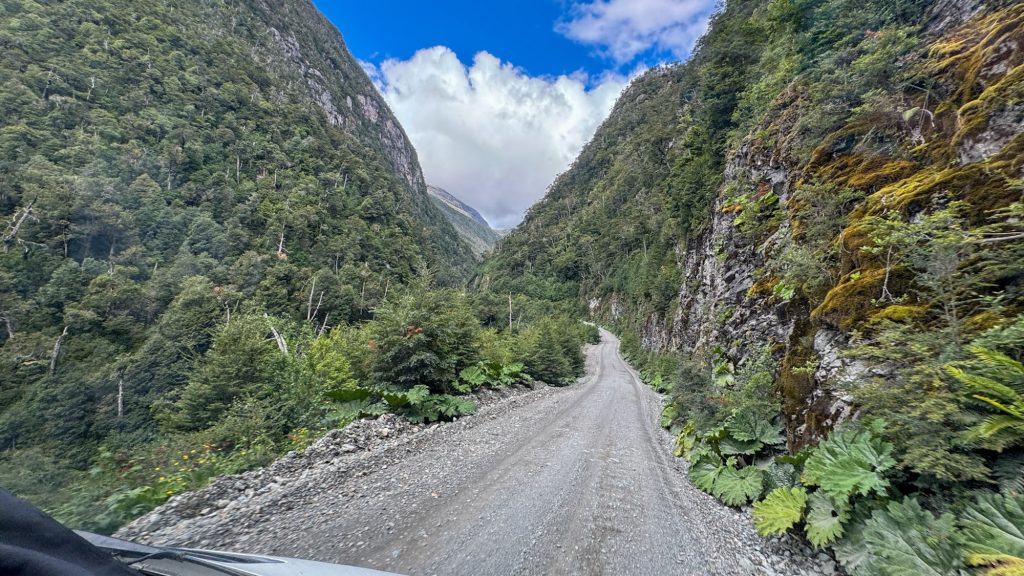
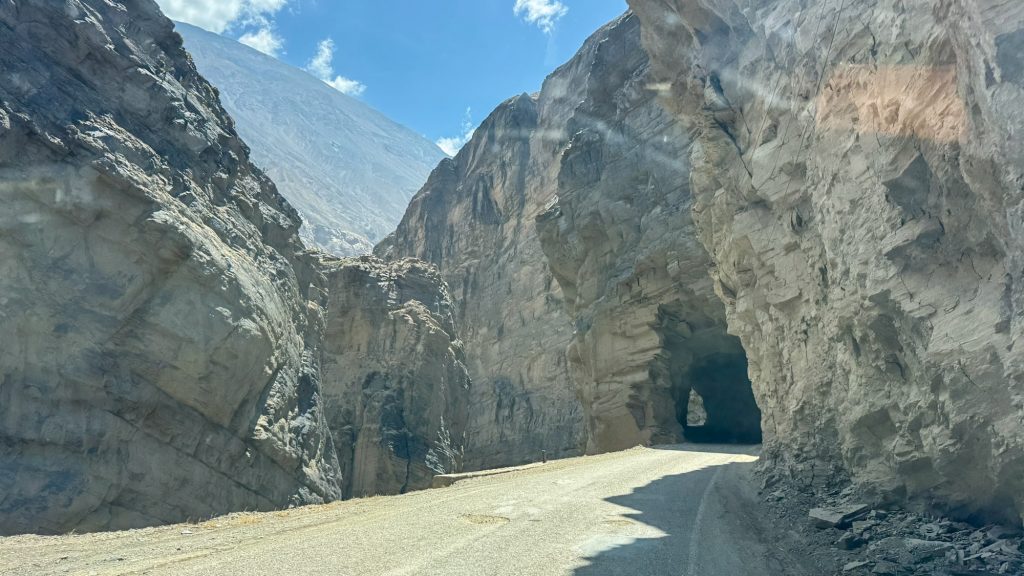
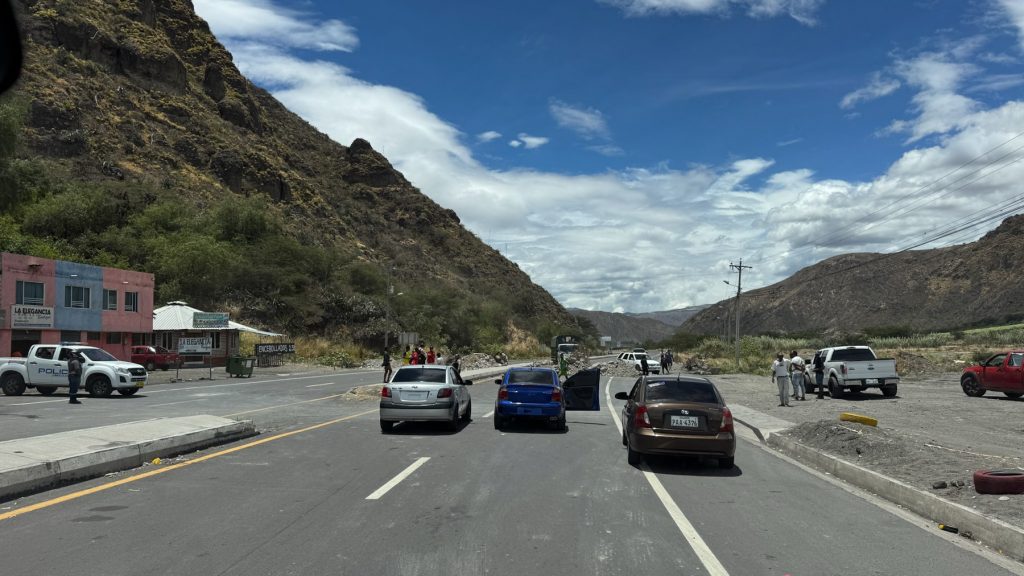
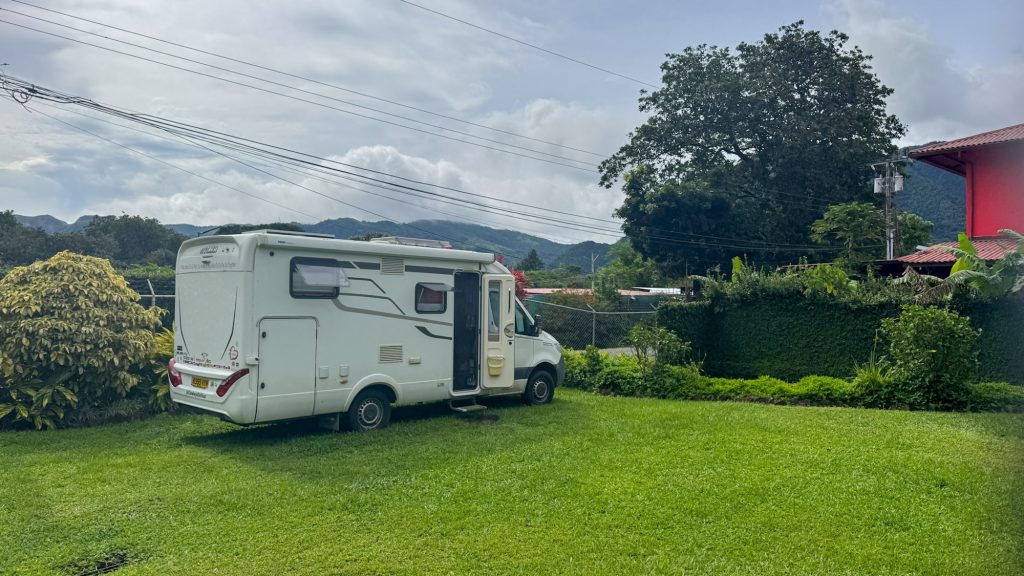
What can we say about the roads other than it was an exhausting drive, even as a passenger! None of the road is perfect but at least the section prior to Puerto Río Tranquilo is mostly paved but after that it’s a bit of pot luck alternating between gravel and compacted mud with long stretches of washboard surface. They are trying to improve the road and there were long sections of roadworks at the time of visit. Sometimes the road is totally closed for a few hours at a time, usually when they are blasting a new carriageway (the information is signposted and we were made aware through iOverlander). On one occasion the roadworks overran as someone had been a little overzealous with the amount of dynamite needed and the diggers had to clear more of the road than originally planned. Luckily for us we can sit in the van drinking coffee until the roadblock lifts!
Campsites used
We found all our campgrounds and free park ups with the app IOverlander.
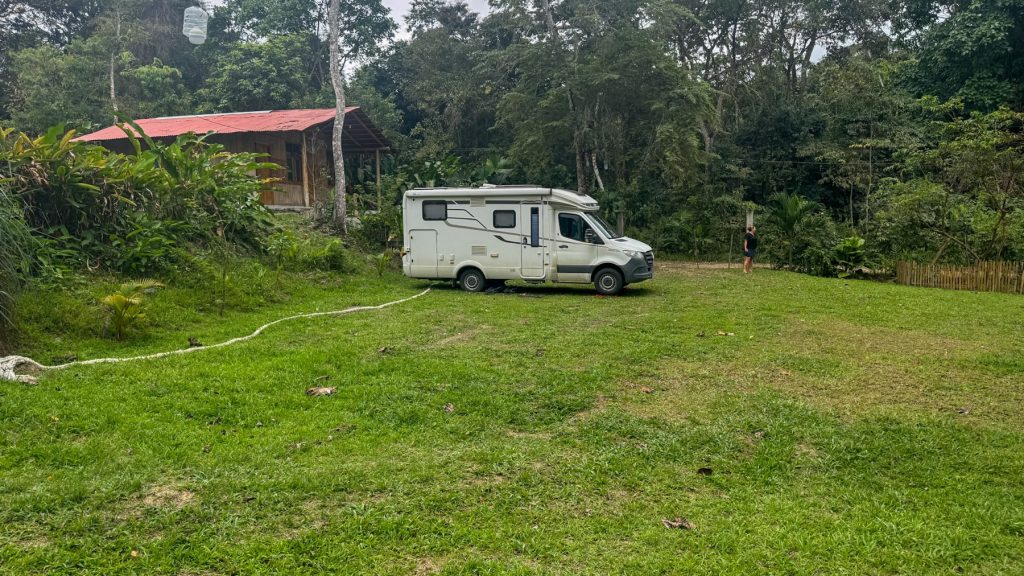
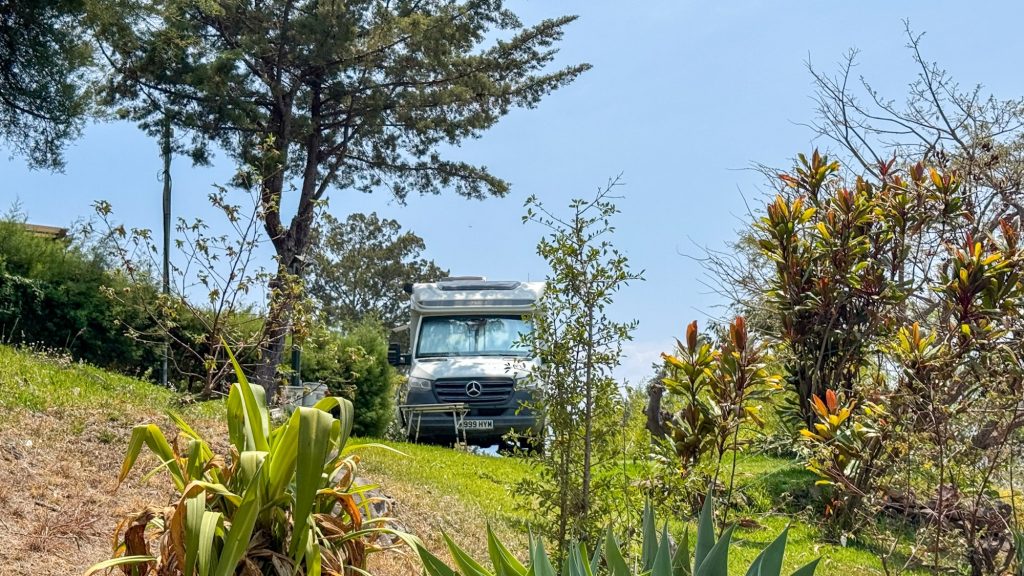
Camping Aldea Puerto Espolón, Futaleufu: CLP12,000 pppn. Forest campsite with a small open grassy area for motorhomes but access is via a steep track with overhanging trees. Shower block and kitchen area (we didn’t use). River access for swimming. Short walk into town.
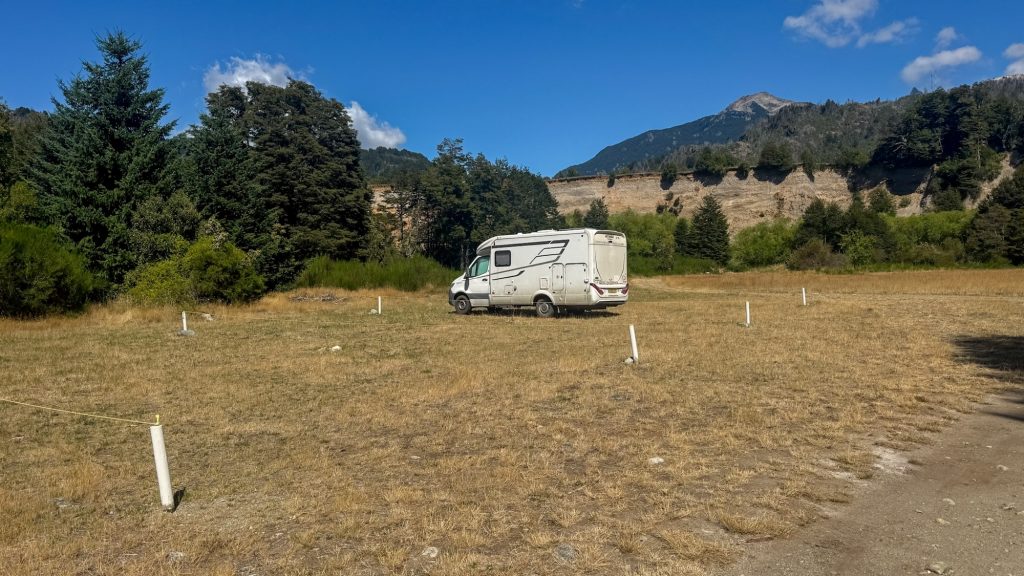
Las Tonvias Camping, near Queulat National Park: CLP10,000pppn. Grass parking. We only stopped for one night so didn’t use any of the facilities (toilet and shower block and kitchen area). Steep access road into the camping area and parking was a bit haphazard – we were lucky to park by the water. Great for accessing the park.
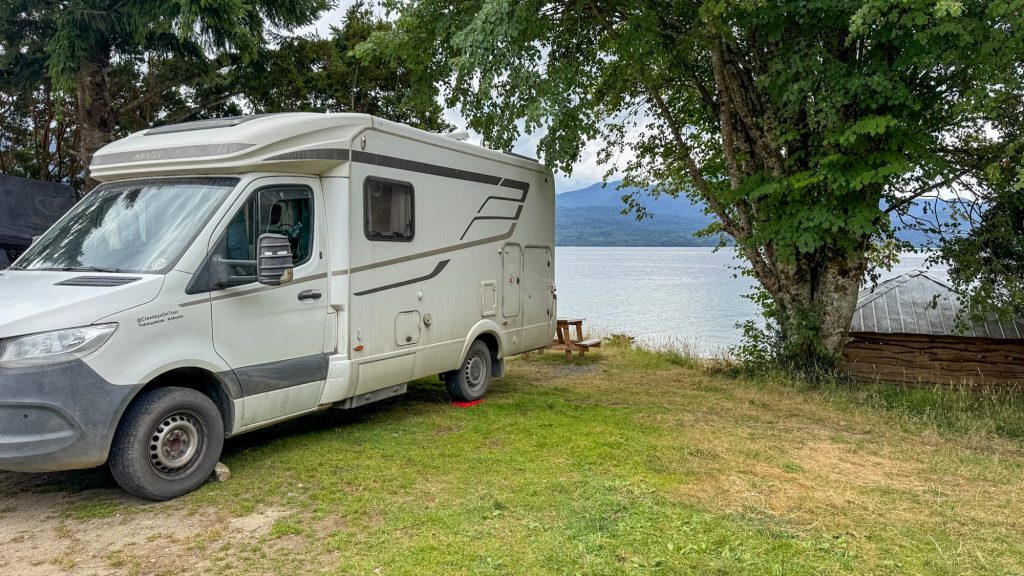
Camping Río Chirifo, Puerto Río Tranquilo: CLP15,000 pn on grass and we struggled to find a level area. There were supposed to be segregated zones for different camping types but it seemed a bit of a free for all to us. Hook up was available but it seemed only in one area. There are a couple of toilet blocks, one with showers and a kitchen area but we didn’t use any of the facilities. It was a short walk into town for restaurants and shops and boat trips to the Marble Caves – the campsite offered discounted tours but we found the cost was the same everywhere.
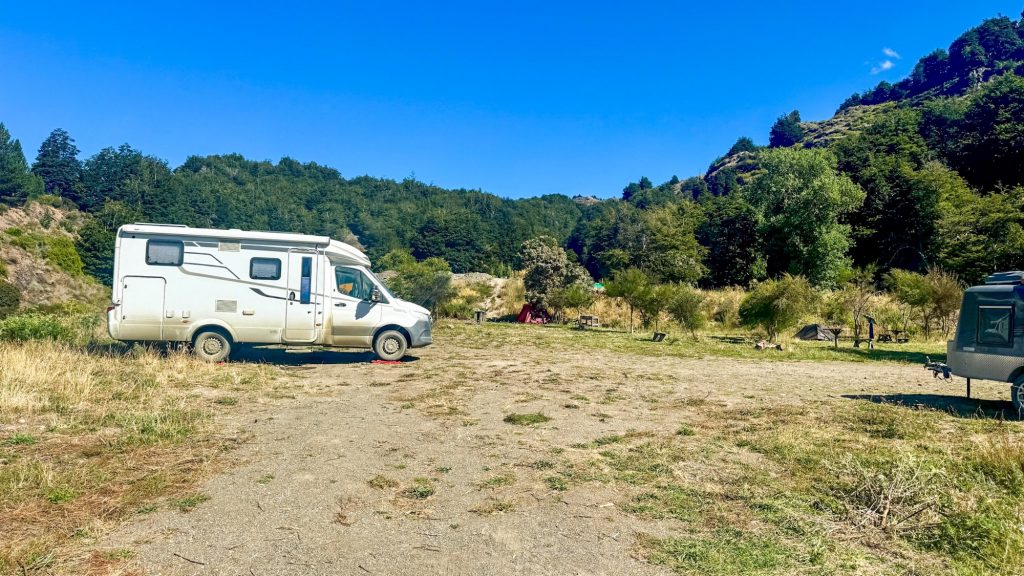
Other overnight spots
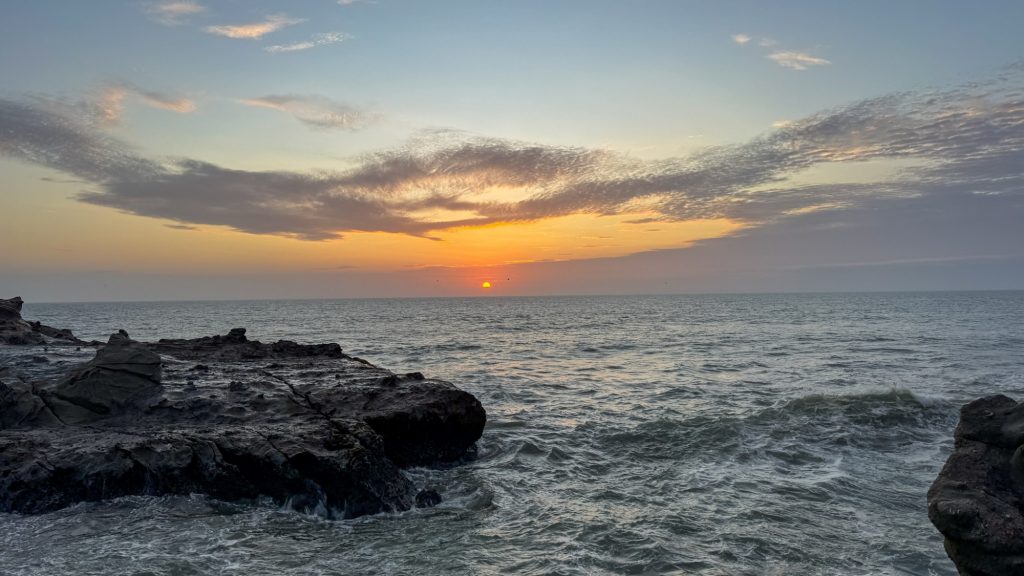
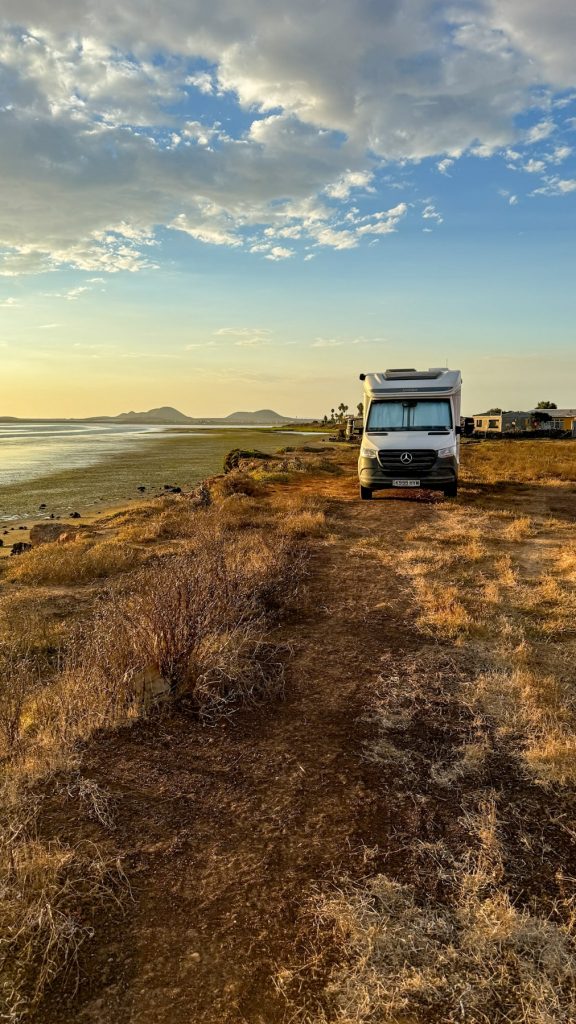
Contao viewpoint: free. Amazing waterside park up after taking the first ferry from La Arena to Caleta Puelcha. We had a couple of peaceful days here watching dolphins and admiring the sunsets.
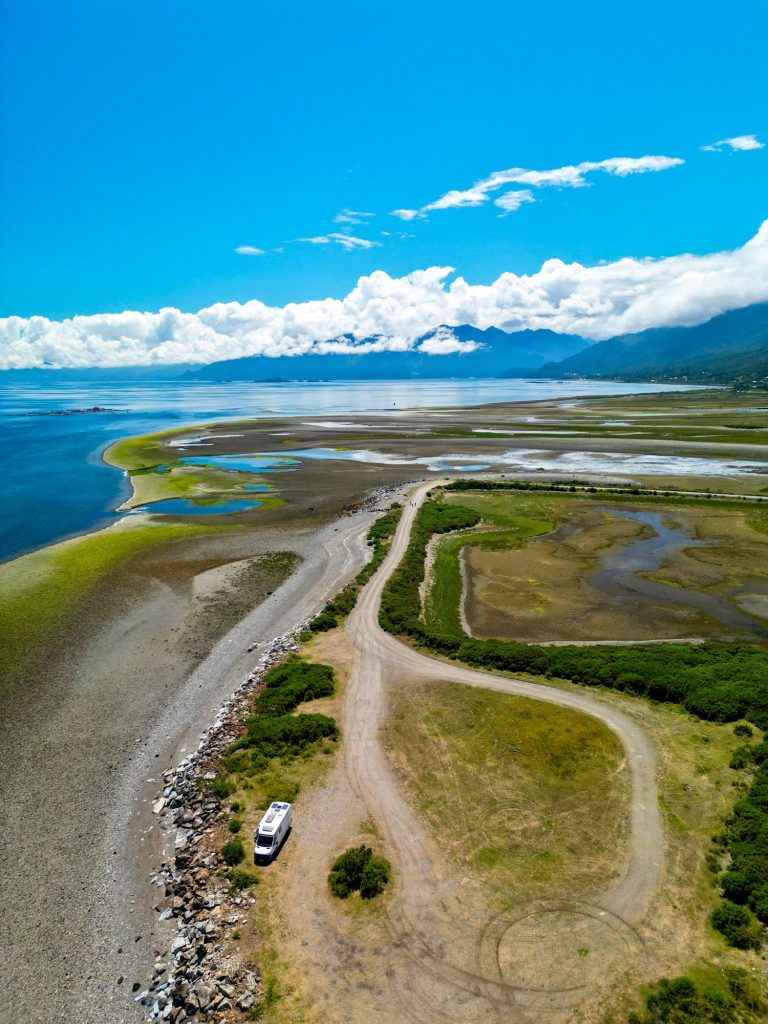
Ferry park up, Caleta Gonzalo: free. Roadside park up on gravel. Not the best but great for an overnighter if getting off the later ferry – we arrived about midnight.
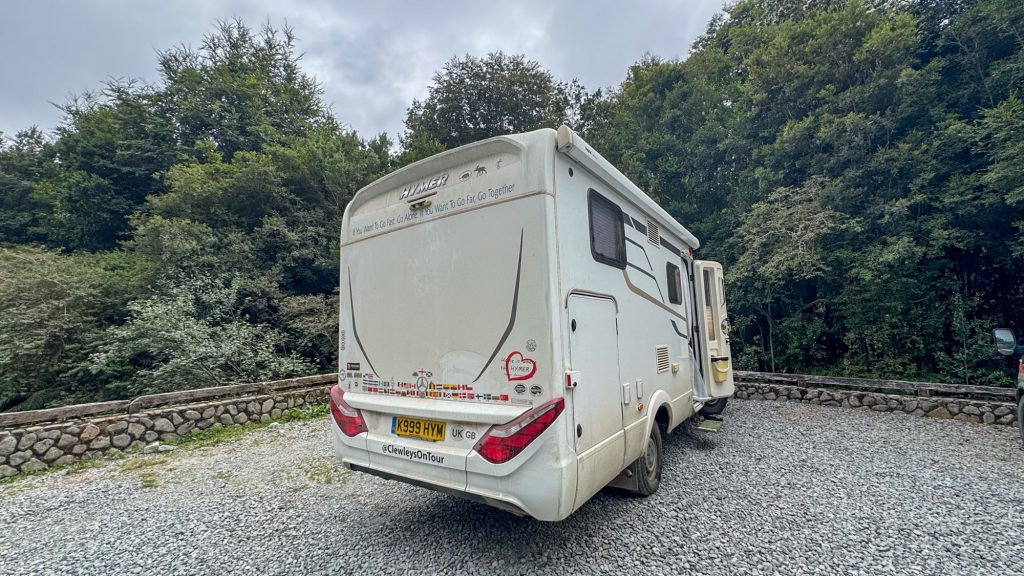
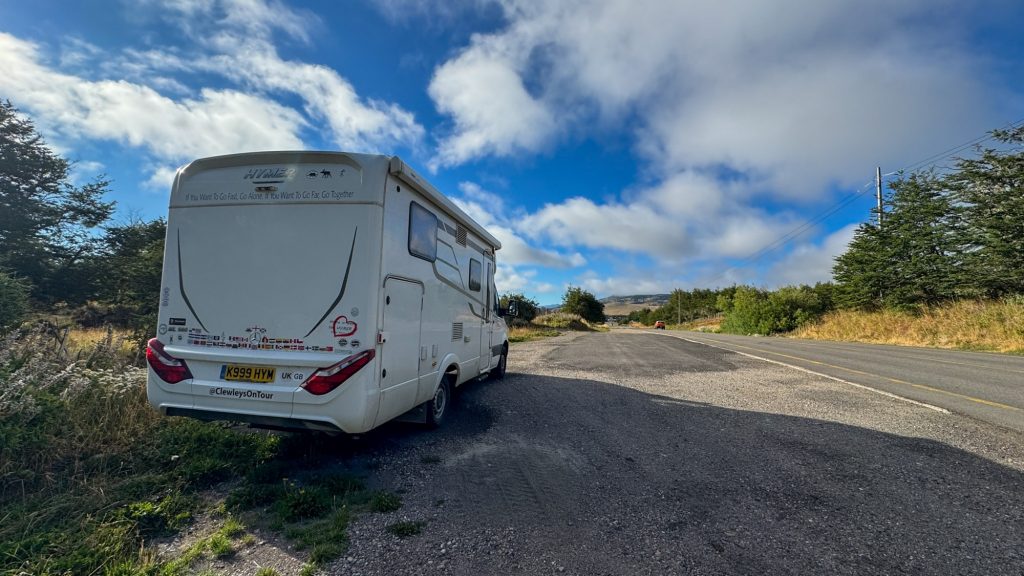
Ruta 7 lay by – various: free. By being a little later in the season we had no issues parking up overnight just off the main road and they were all very quiet.