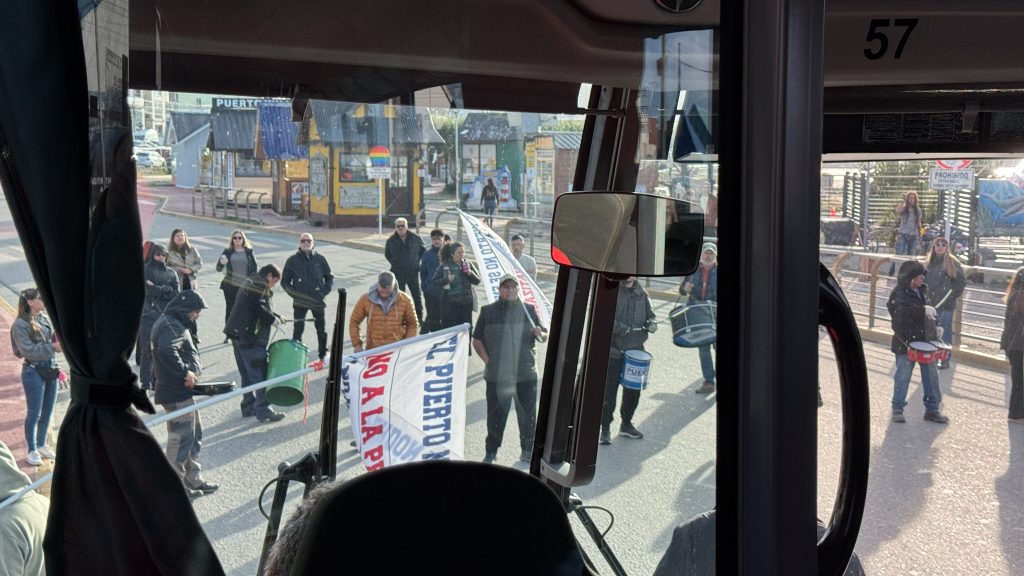
Safe to say it was going to take a while to come back down to earth after the cruise! After disembarking in Ushuaia (and straight into a protest blocking the road) we headed to the Tierra del Fuego National Park and a little bit of hiking to get the legs working again.
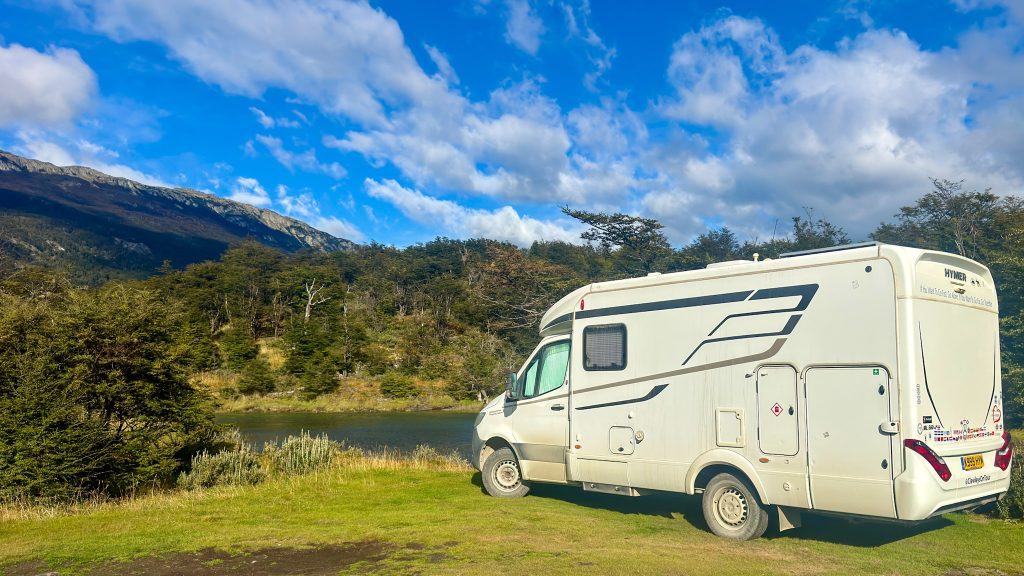
The park is the end of Ruta 3, a road that would take us a long way north in Argentine but before that and with the laundry done, it was a slow drive back to Chile for a week or so.
In Punta Arenas, after filling up with LPG, we parked up for the night on the seafront. Little did we know that the nearby closed up food trucks would open for business at 8pm and we’d find ourselves surrounded by customers until about 1am.
After a quick shopping trip the following morning we drove to Punta Arbol, the most southerly point of mainland South America accessible by car.
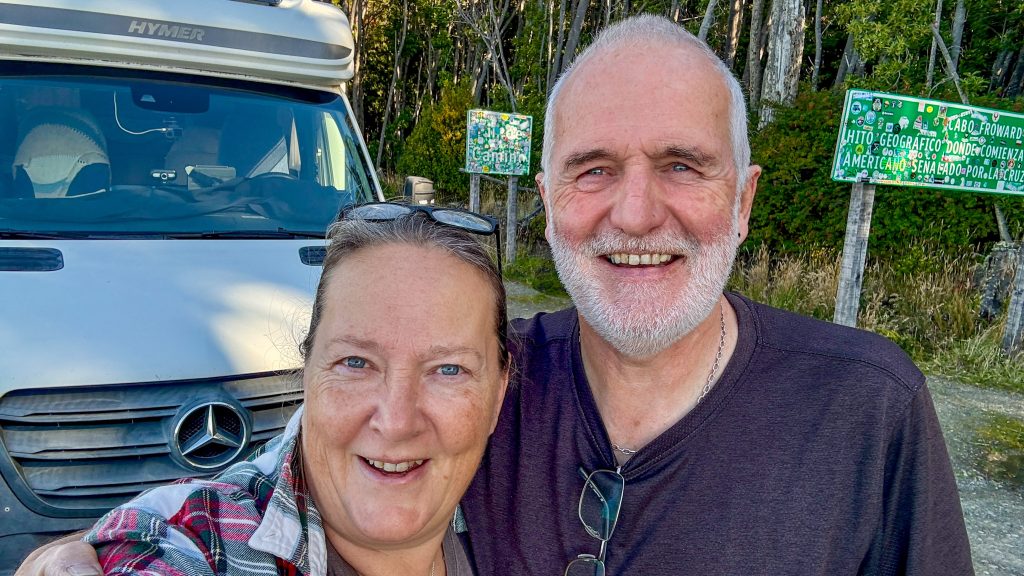
Now here we really did have a couple of peaceful nights.
Our plan had been to visit Torres del Paine National Park for some hiking but when we arrived in Porto Natales the winter weather closed in and we didn’t fancy getting snowed in! We have been there before so we were not too disappointed.
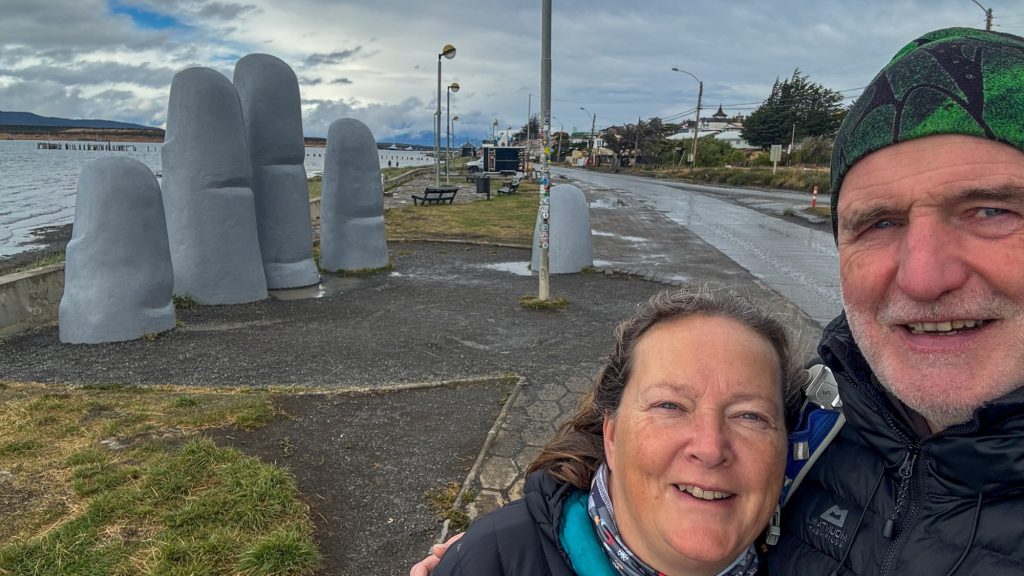
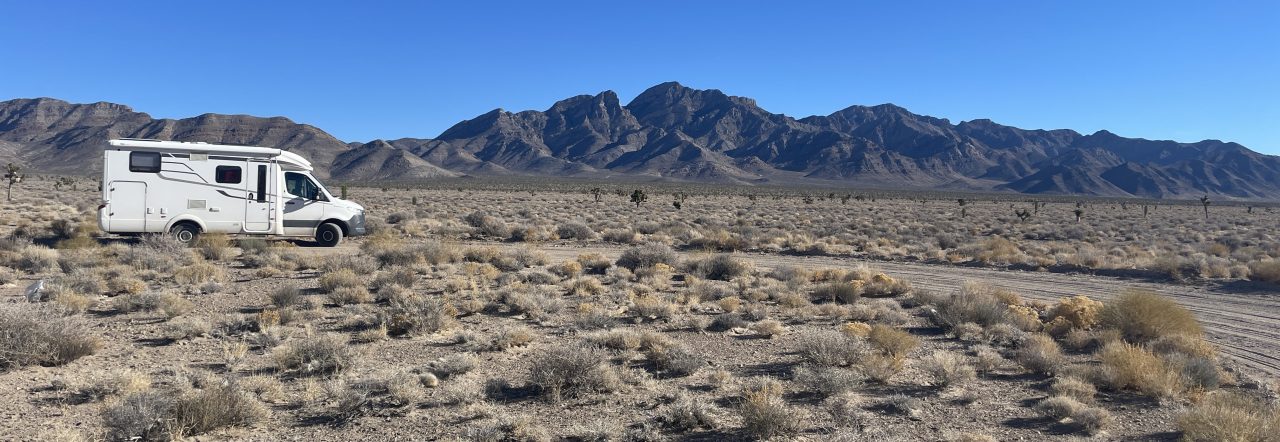
After our fifth border crossing between Argentina and Chile in a couple of months, we said goodbye to the Andes and made our way to the Atlantic coast to pick up Ruta 3 again and start the long drive north. In this leg we would cover almost 3,000 miles in less than a month so we’d have a couple of long days driving broken up with several stops along the way.
Initially we mostly followed the coastline through mile after mile of open grassland but made several stops along the way, the first being Monte Leon National Park. It’s free to enter (camping is charged separately) and well worth the 20km bumpy drive to the main parking area.

There is some hiking in the park and plenty of wildlife including sea lions, penguins, cormorants and guanacos. We weren’t lucky enough to spot a puma but know others who did!
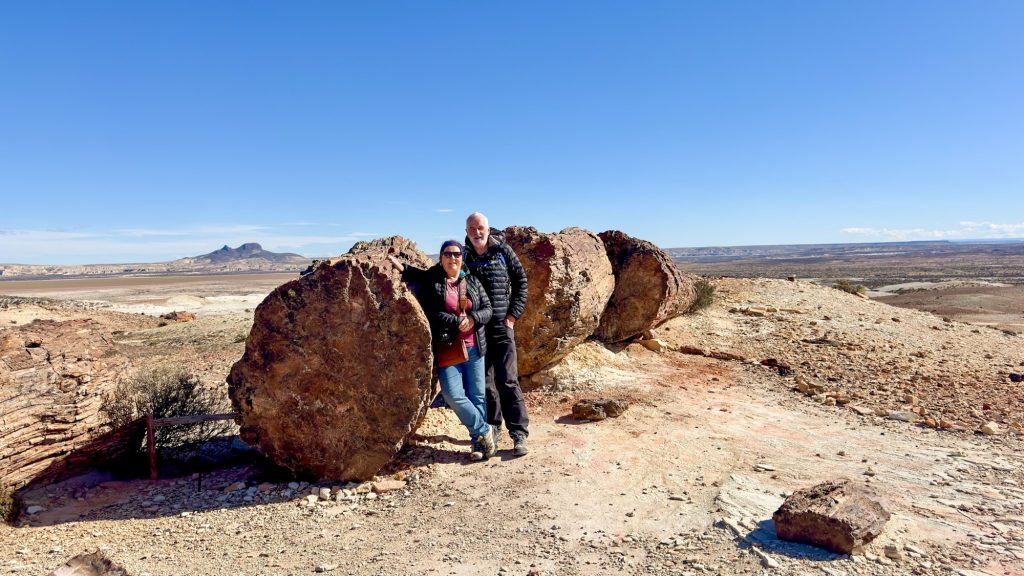
From there it was on to the Bosque Petrificado National Park, which again was free to enter and park up for the night. We were given a short introduction, in English, to the park; its history and how the ancient trees had been turned into rocks.
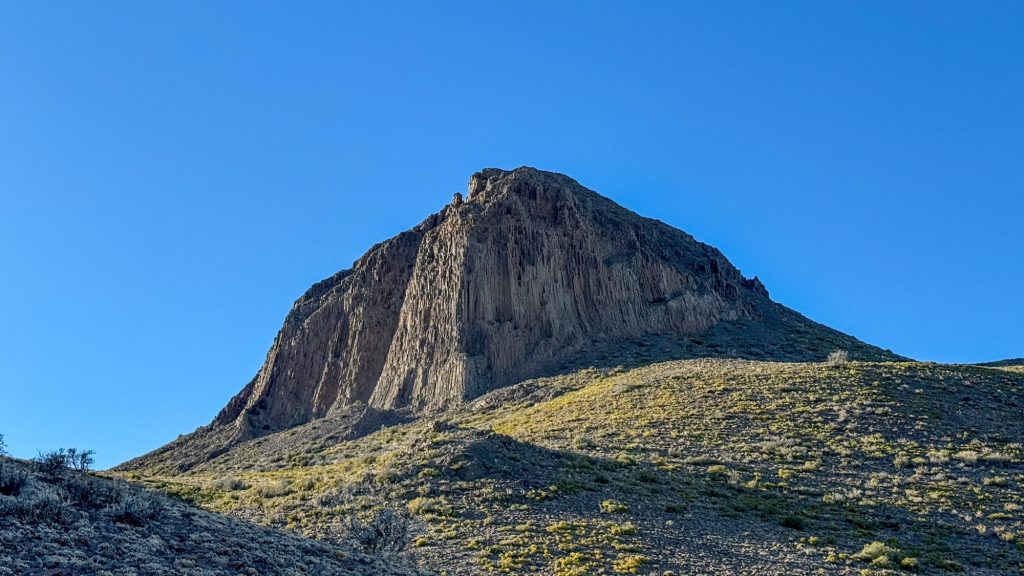
We signed in for doing the La Mujer y Hija hike the following day, a short but sharp climb up and then a flat walk around the two extinct volcanoes. There were amazing views across the park from the top.
This year the Easter weekend coincided with Malvinas Day and whilst everyone we have met has been very friendly, we thought it best to keep a low profile with our British van so we headed to a campsite in Puerto Deseado for a few days. From here we took a boat trip with Darwin Expeditions to visit Isla Pingüino (cost ARS180,000 each and they do accept cards).
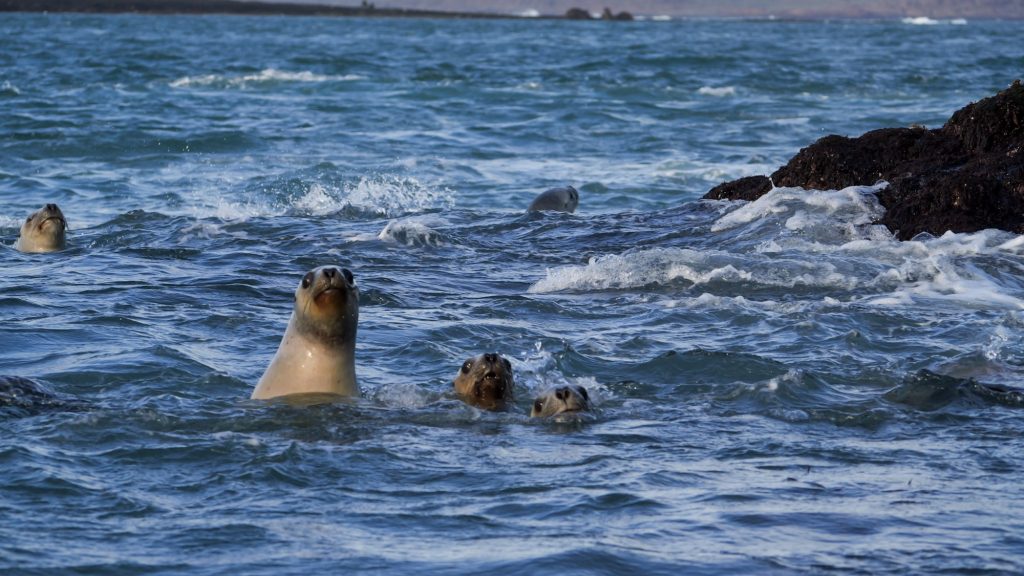
As we left the harbour we were accompanied by dolphins and once we landed we were surrounded by so many sea lions and Magellanic penguins.
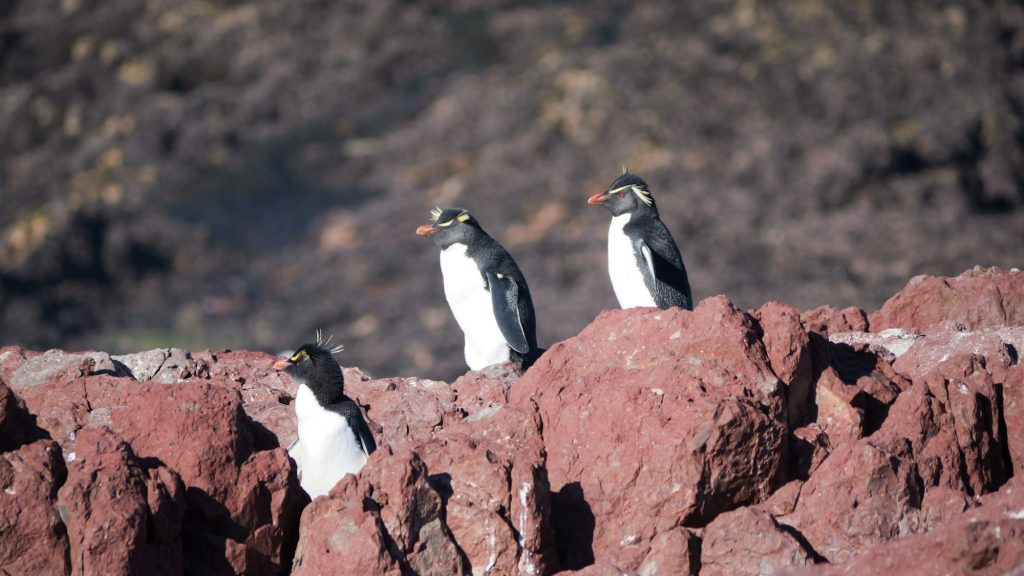
However we had to cross the island to find the main reason for the trip – a colony of rockhopper penguins. We had a good hour just sitting and watching these loveable creatures!
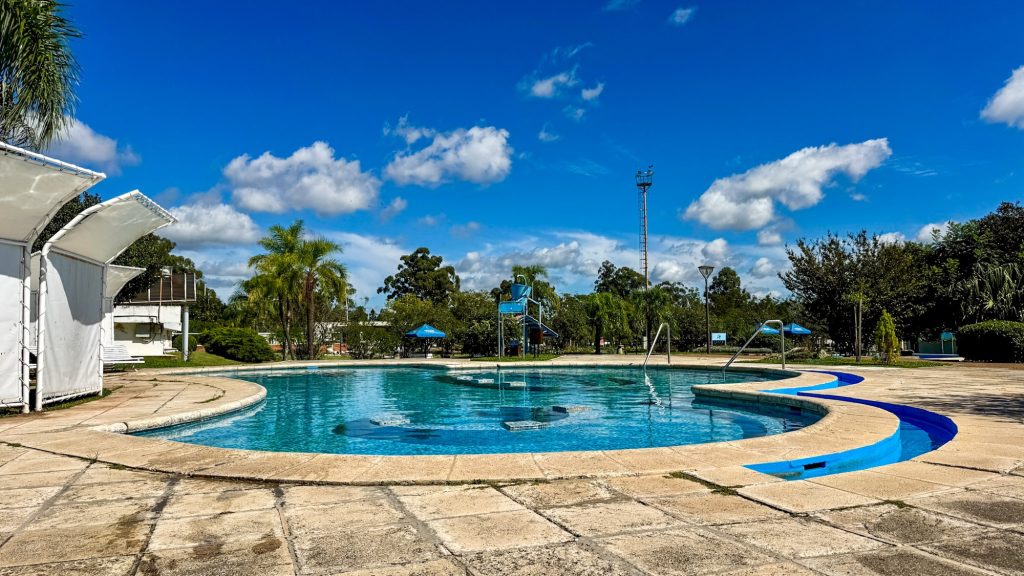
Northern Argentina sits on the Guarani Aquifer, one of the world’s largest groundwater reservoirs and deep drilling has given access to naturally heated water which has led to the development of several spa towns. We bypassed some of the large towns and headed to Termas Chejani as there was also a campground attached to the spa. Entry to the thermal pools is ARS10,000 per person but because we were camping there we received a discount of ARS2,000 each and we could come and go all day. It’s possibly heaving in peak season but was fairly quiet when we visited.
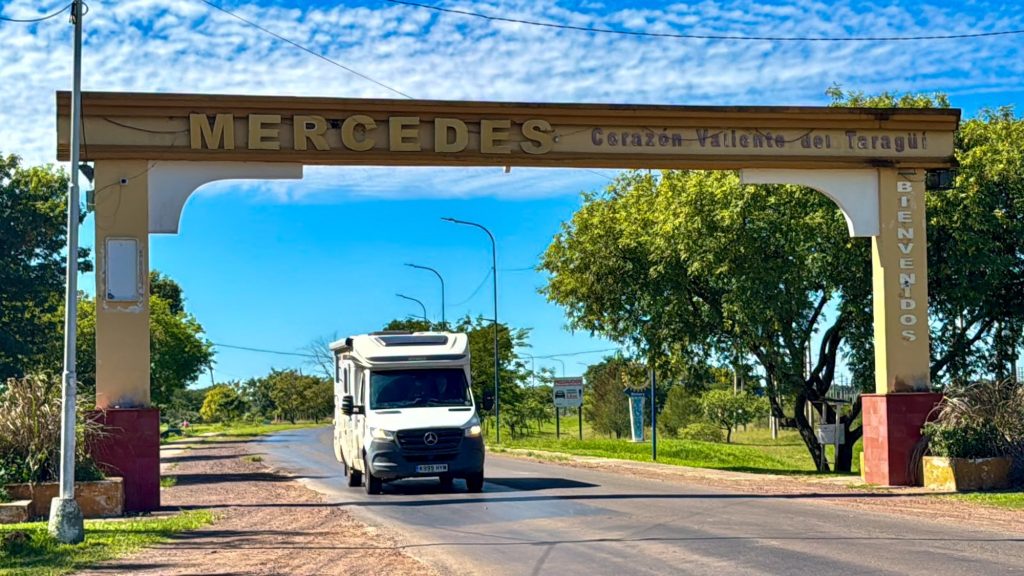
And so ended our time in southern South America and for the first time in nearly five months our next country would be neither Chile nor Argentina!
General info
It’s fair to say that Argentina has its issues but its national parks are not part of them. Entrance fees, where they have them, often cover multiple days and overnight parking is permitted. The only proviso is usually to take your own rubbish out of the park with you.
General overnight parking is really easy (we find spots though iOverlander) and we have never felt unsafe nor have we been asked to move on.
The main roads are a bit hit and miss with potholes and deep grooves, and away from them, there is not much tarmac. Driving on the whole is not too insane but we do avoid the cities.
Apart from Punta Arenas in Chile, LPG in southern Patagonia to refill our Gaslo cyclinders was nigh on impossible to find.
If we are in a town and need to get around we tend to use Uber (or a local equivalent). It’s cheap and easy and we don’t have to worry about our communication skills!
A quick recap on our communications set up. We have a Starlink Mini which, since we’ve set it up to run off the 12v supply, is on almost all day, every day. We use eSims in country for when we are away from the van and currently use GoMoWorld which we have found the cheapest. Bob has retained his UK phone contract on a minimum tariff with Smarty whilst June uses a company called Devyce which is basically a forwarding service for calls and texts.
Campsites used
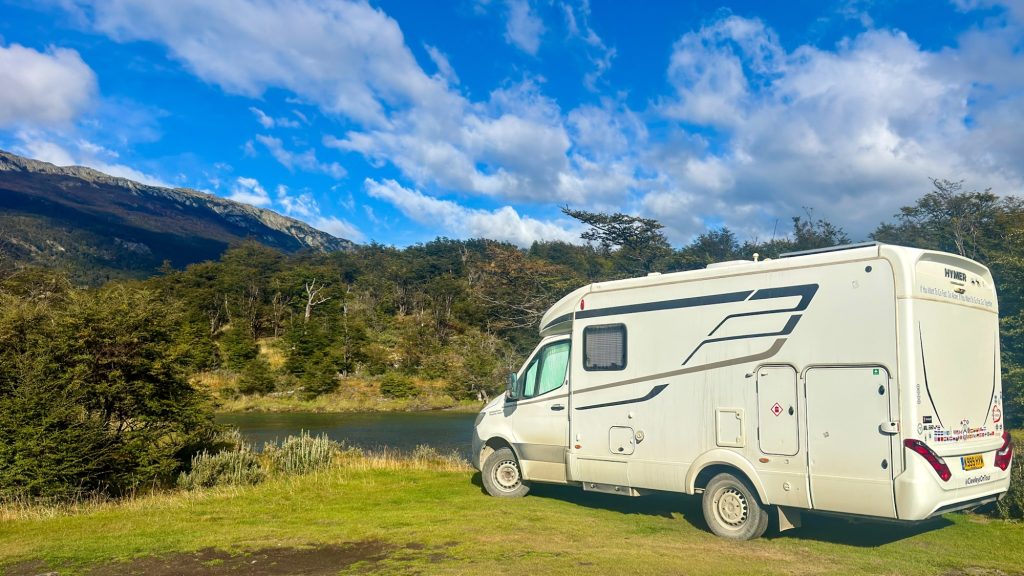
Tierra del Fuego National Park, near Ushuaia: entrance to the ARS30,000 per person and is valid for 3 days/2 nights. There are designated camping areas (all grass) but no services other than portable toilets. We found a quiet spot on a river bank from where we could do a couple of walks.
Camping Guino, Puerto Natales: CLP 10,000 pppn and CLP2,000 for electric hook up. A large plot set up for tents with parking for motorhomes around the edge and need blocks to get level. Large communal area with a kitchen and WiFi, plus shower and toilets. They offer a laundry service (charged per kg) but wash only – the Patagonian wind will soon dry anything and they have washing lines under cover.
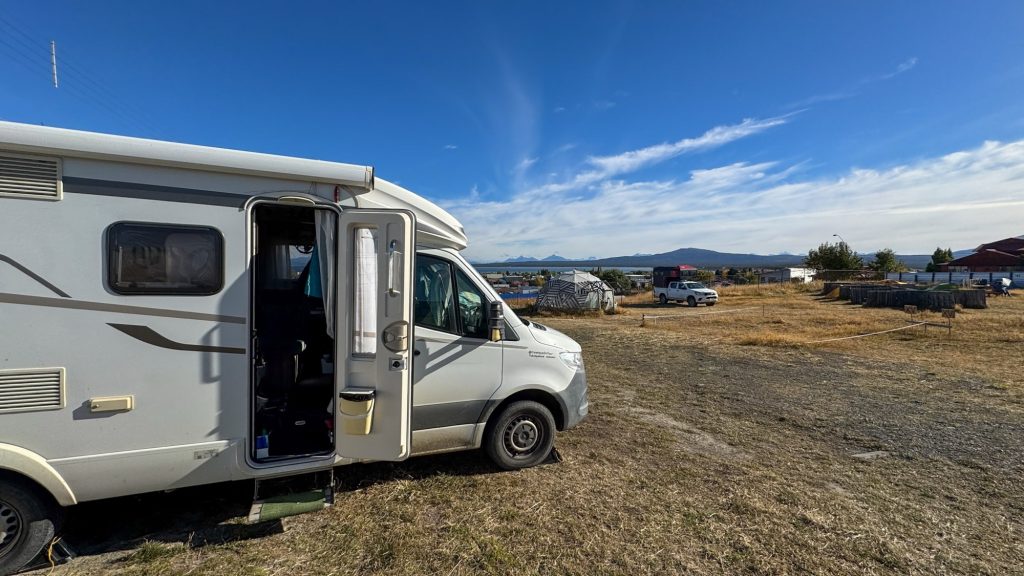
Monte Leon National Park: free entry to the park but camping is ARS15,000 pn payable in the cafe. They couldn’t accept cards when we went to pay so we had to pay cash. Hard to find a level spot and also somewhere out of the wind but as it was quiet we were able to park close to the cafe and get some shelter.
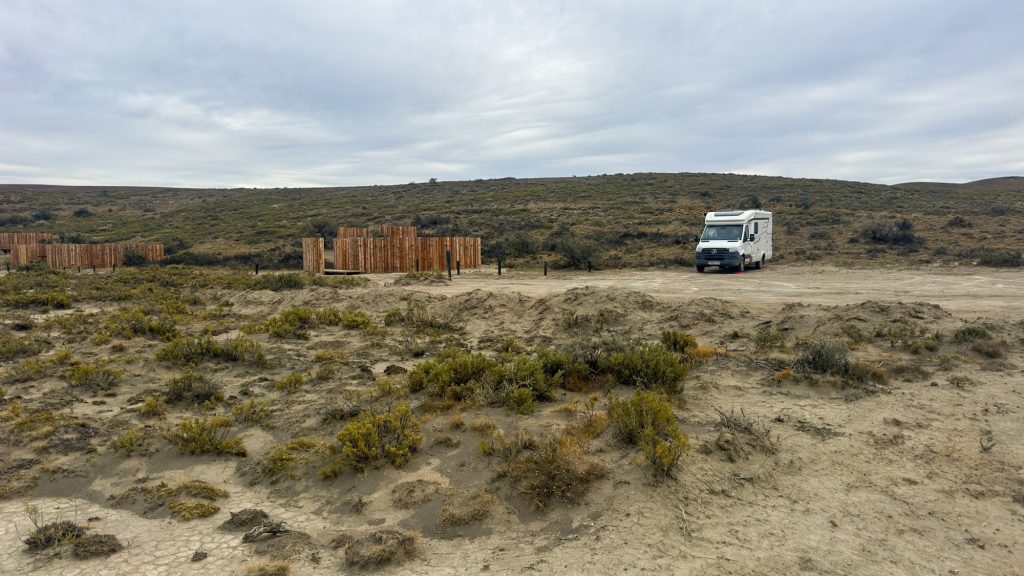
Parque Nacional Bosques Petrificados de Jaramillo: free to enter and free to stop overnight – probably because it was at least 50km each way from the main road along a mud/gravel track to the visitors centre and then another 20km to the volcano hike. There are toilets at the visitors centre but no other services otherwise. well worth it though!
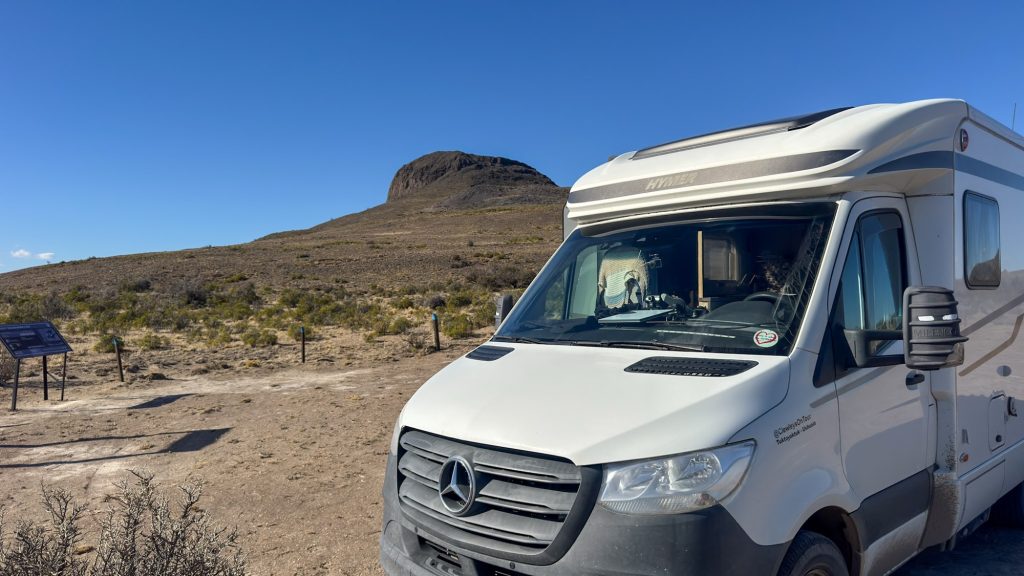
Camping La Costanera, Puerto Deseado: ARS15,000 per night. A large tired looking municipal campground on the sea front. We parked next to a shelter with a BBQ and electric socket. Water was available from a tap on the outside of the toilet/shower block. Short walk into the town.
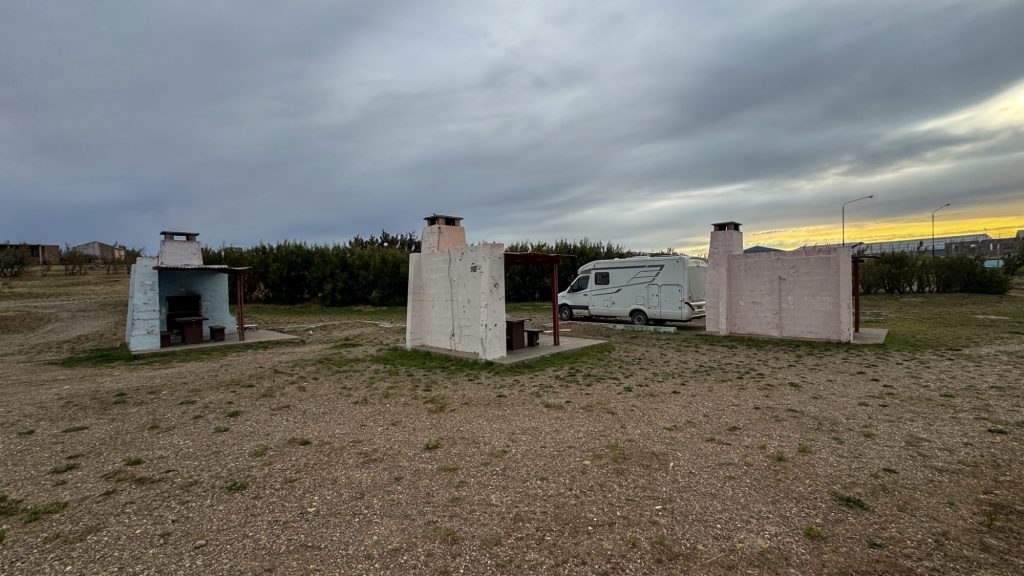
Termas Chejani, Chejani: ARS25,000 pn including electricity. Most of the camping spots were in the trees but there are a few with a clear view to the sky (vital for those with Starlink!). Although sunny, the ground was very wet when we visited and the tracks were very rutted. The wider site includes restaurants, shops and a laundry but the latter was very very expensive.

Other overnight spots
Camping Rio Olivia, near Ushuaia: large, free, riverside camping area complete with brick BBQs. Parking on grass, no facilities. We didn’t venture too far in as the weather forecast was rain and we wanted to be able to get out again!
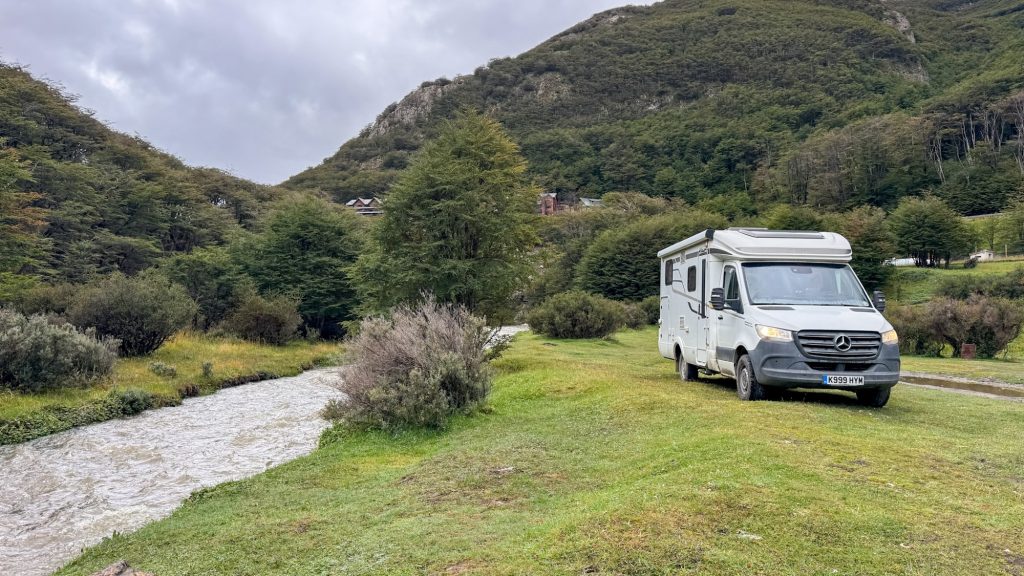
Lago Fagnana: free parking in the car park. Mud track to get there but the drive wasn’t too bad. A very peaceful night.
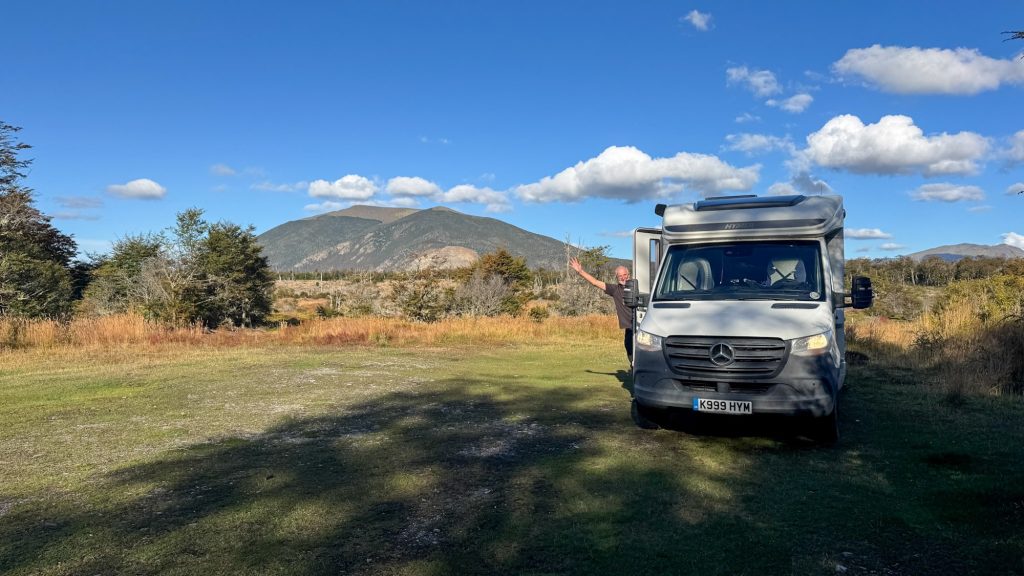
Cerro Sombrero: an overnight stop by a sports centre in this town which grew along with the oil industry. No facilities but away from the wind and a handy stop before taking the ferry across the Magellan Strait the next day.
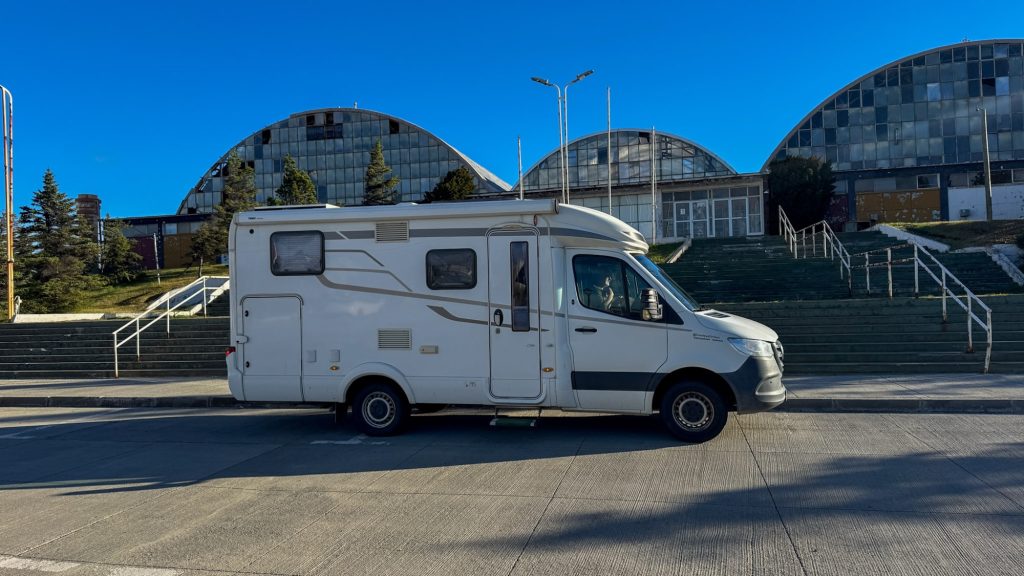
Punta Arenas: there is lots of free parking along the sea front but you need to get your timing right. Places were still full of workers when we arrived so we ended up parking by some food trucks which didn’t make for a quiet night! Easy walk into town and along the promenade.
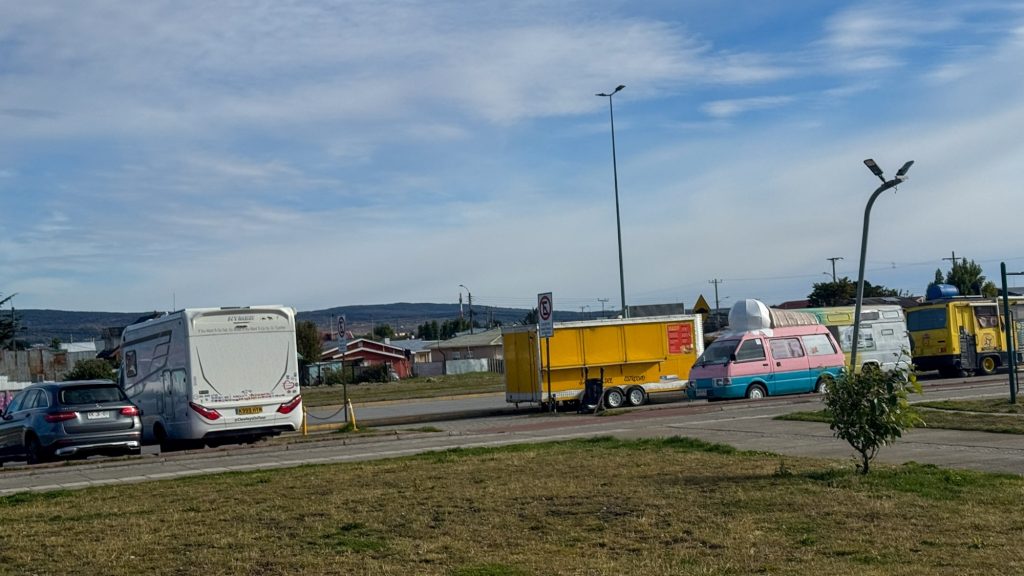
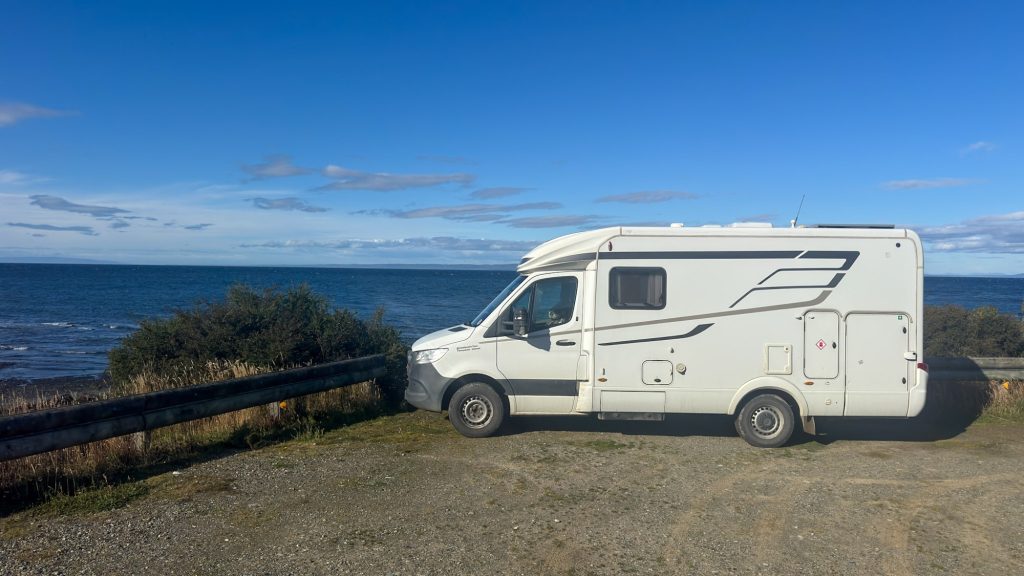
Punta Árbol: after driving to the most southerly point we doubled back to a car park where we stopped for a couple of nights. No facilities but amazing sunsets.
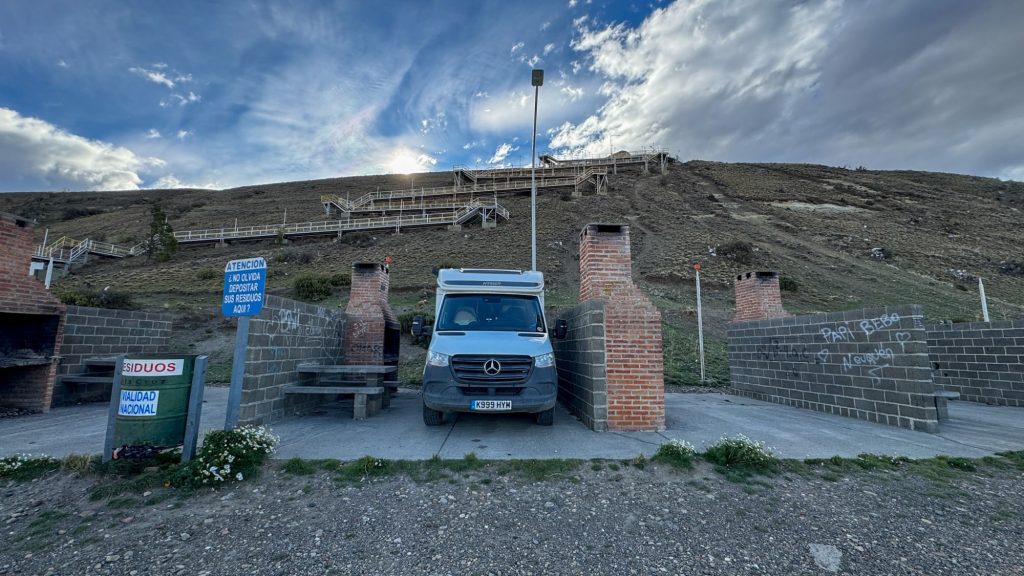
Güer Aike: a picnic/BBQ area near Rio Gallegos. They have built little shelters that you can park in to get out of the wind. There is a staircase up to a viewing point over the nearby estuary but we didn’t go up there. Great for one night.
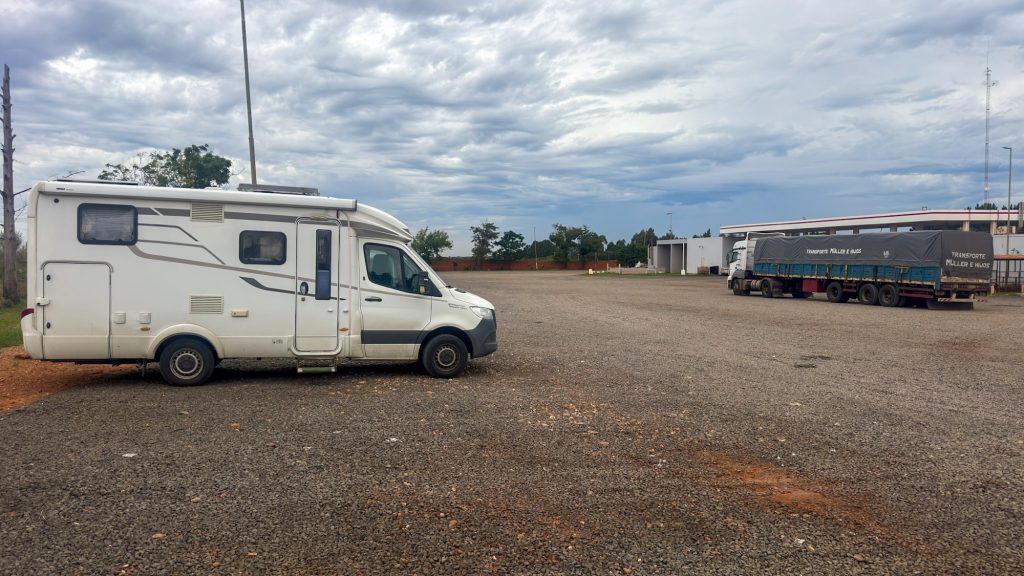
Fuel stations: we have stayed in multiple fuel stations and have never had a problem. Although we don’t use them, many offer facilities such as toilets and showers plus an onsite restaurant. They have huge parking areas for lorries and we have found that if we head right to the back of the parking area we usually have a quiet night. We usually get fuel where we are staying and will often fill up with water there.
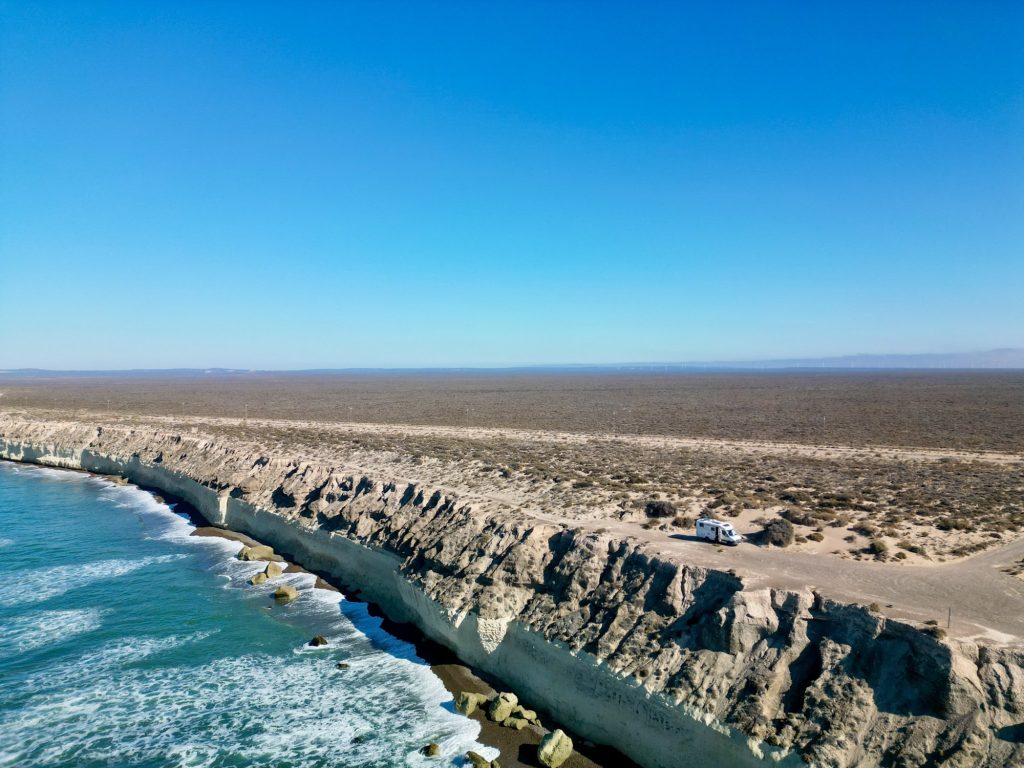
Playa Magagna, near Rawson: great cliff top park up. No facilities and apart from the occasional walker we were pretty much on our own. There are several parking spots along here but watch out for soft sand.
Rio Colorado: we parked on the road by the river so no facilities there but on the other side of the main road we found a motorhome service point! There was somewhere to dump black/grey waste plus a fresh water tap and all free to use.
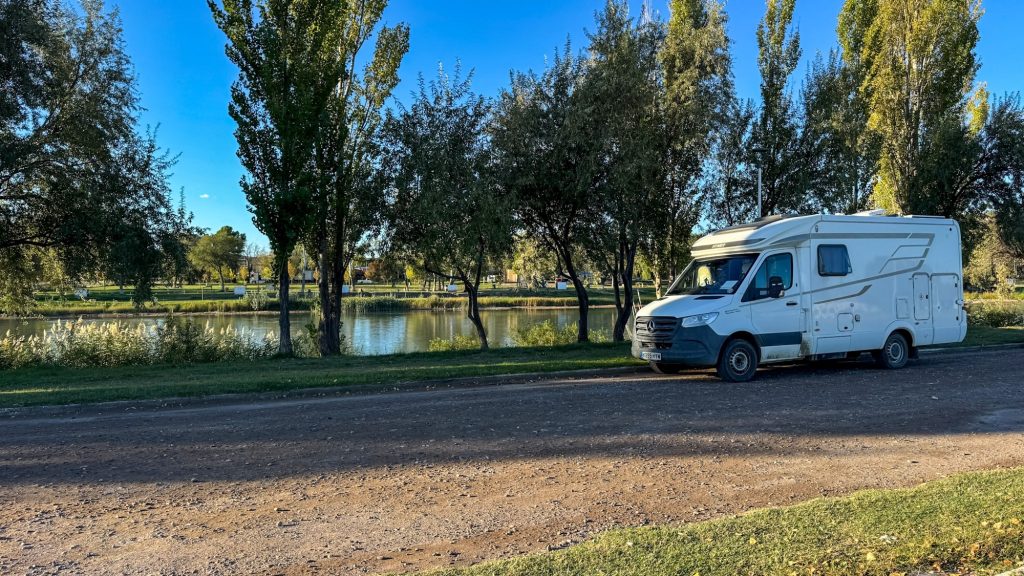
Laguna de Gomez, near Junin: a large public park which allows overnight parking (we stayed three nights). It’s all grass and some areas are very wet but we found a level, dry spot. There are several toilet and shower blocks throughout the park and on the Sunday when we arrived there were restaurants open. The weekends are very busy but most people leave just after sunset and the nights were very quiet.
